Uranus frequency in Hz: 207.36 and the 84-year orbit behind it
The Uranus frequency is 207.36 Hz, the Uranus tone of Hans Cousto's cosmic octave: the planet's orbit of the Sun, 30,685 days or about 84 years, raised 39 octaves until it can be heard. It lands almost exactly on the G sharp below middle C. The meanings linked to it, such as originality and sudden change, come from modern astrology, and no study has tested 207.36 Hz.
Ready to play Uranus 207.36 Hz
Let yourself try an idea you have not tried before.
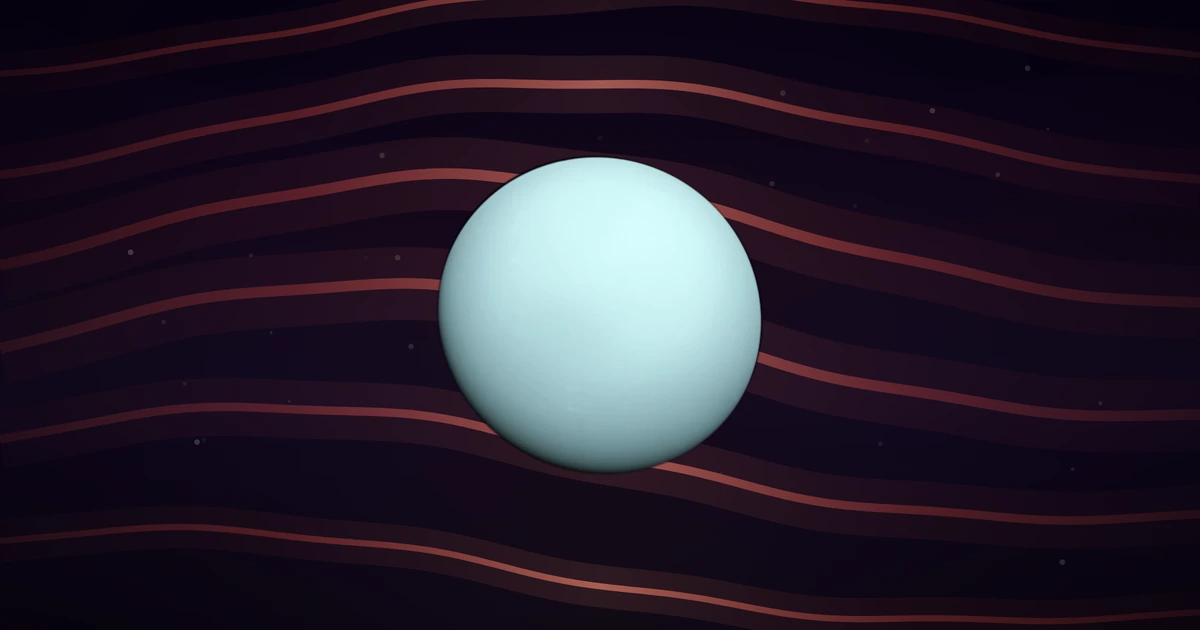
Where does 207.36 Hz come from?
From the length of a year on Uranus. Timed against the stars, the planet takes 30,685.4 days to go once round the Sun, according to NASA's Uranus fact sheet: 84.01 Earth years, about the span of a long human life. Taken as a vibration, one orbit in 2,651,218,560 seconds is a frequency of under four ten-billionths of a hertz.
Halving the length of a cycle doubles its rate, and each doubling is an octave, the step between two notes of the same name on a piano. Uranus needs 39 of them. Two to the power of 39 is 549,755,813,888; divide it by the orbit's 2,651,218,560 seconds and the answer is 207.36 cycles a second.
The first two halvings are more than arithmetic. Half an orbit, 42 years, is about how long each pole of Uranus stays in sunlight, and a quarter, 21 years, is about one of its seasons, as the chart further down measures. By the 32nd octave the orbit has become 1.62 Hz, a slow pulse of 97.20 beats a minute, the tempo Hans Cousto's tuning tables give for Uranus. The 36th octave, 25.92 Hz, is the first inside the range of hearing, a deep rumble. Three more and it is the tone.

Why is 207.36 Hz a G sharp?
Because it lands almost exactly on that key. In standard tuning, with the A above middle C at 440 Hz, the G sharp below middle C is 207.65 Hz. Cousto's tables put the Uranus tone 2.47 cents under it and give its matching A as 439.37 Hz. A cent is a hundredth of a semitone, so the gap is about a fortieth of a semitone: played together, the piano's G sharp and the Uranus tone would drift in and out of step only once every three and a half seconds.
No other planet's tone sits so close to a standard key. The same tables list every planet's orbit tone beside its distance from 440 Hz tuning. Venus comes next at 9.6 cents, Saturn and Jupiter lie 12 and 13 cents off, and Mars, Mercury, Neptune and Pluto lie 25 to 33 cents off.
Two more tones of the cosmic octave share the key. The Moon's month gives 210.42 Hz, 23 cents above the G sharp, and Neptune's orbit gives 211.44 Hz, 31 cents above it, so all three round to the same note. The guide to 210.42 Hz, the Moon tone and the 211.44 Hz Neptune page cover the other two.
The method is Cousto's. His tables record that the Swiss mathematician and music researcher had the idea in Munich in October 1978: to carry the musical law of the octave beyond the range of hearing, starting with the rhythms of the Earth, the Moon and the planets. Saturn's orbit, raised 37 octaves, gives 147.85 Hz, the Saturn tone, and Jupiter's, raised 36, gives 183.58 Hz, the Jupiter tone. The guide to planetary frequencies sets out the whole cosmic octave, and the planetary collection plays every tone.
Who discovered Uranus?
A musician. William Herschel was the son of an oboist and played the oboe himself in the Hanoverian army's band. After settling in England he wrote 24 symphonies and many concertos, and from 1766 he was organist of the Octagon Chapel in Bath. He took lessons from a local mirror-maker and built his own reflecting telescopes.
In March 1781 he noted a new object in the constellation of Gemini and took it at first for a comet or a star. Within two years astronomers agreed it was a planet, the first discovered since antiquity and, in the words of NASA's Uranus facts, the first planet found with the aid of a telescope. Herschel wanted to call it Georgium Sidus, after King George III. The name that stuck, Uranus, is the Greek god of the sky.
Cousto makes the same point from the sky watcher's side: of the planets, Uranus is the first that the naked eye can make out only in very good conditions. So 207.36 Hz belongs to a world nobody knew was a planet until a composer's homemade telescope picked it out.
What are the benefits of 207.36 Hz?
The benefits named for 207.36 Hz are symbolic, and young by the standards of astrology. They come from Cousto's notes and from modern astrology's Uranus, and no study has tested any of them.
Start with Cousto. His page on the Uranus tone, in German, gives its effect in one line: "Fördert die Überraschungs- und Erneuerungskraft", that is, it encourages the power of surprise and renewal. He ties Uranus to the principle of dying and becoming, and to the sign of the Water-bearer, Aquarius.
Astrology had to make room for the new planet. In the old scheme Aquarius belonged to Saturn; once planets beyond the reach of the eye were found, most astrologers settled by consensus on Uranus as its ruler. Saturn stays its traditional ruler, and Harmonance's Aquarius page plays both tones. The guide to astrology frequencies pairs every sign with its planet the same way.
The meanings came with the ruler. Modern astrology links Uranus with ingenuity, invention, originality, freedom and sudden, unexpected change, and notes that its discovery coincided with the Romantic movement and its love of individuality and creative freedom.
So when a video or a website lists breakthroughs, originality or creativity as benefits of 207.36 Hz, those words come from a tradition a little over two centuries old. They describe what people have made of a surprising planet, not something measured in listeners. Harmonance's creative block page plays Uranus beside 417 Hz and 741 Hz in that spirit, as a sound to start work to.
Why does Uranus have 42-year seasons?
Because it lies on its side. Its axis is tipped 97.77 degrees to its orbit, so instead of spinning upright like the Earth it rolls round the Sun, turning first one pole towards it and then the other. NASA calls the result the most extreme seasons in the solar system.
To see one whole Uranian year, Harmonance asked NASA JPL's Horizons system where on Uranus the Sun stood overhead, every ten days from 1945 to 2034, 3,288 readings, and drew the line.

| Moment | When | Sun overhead at |
|---|---|---|
| Furthest north | April 1946 | 82.58° north |
| Over the equator | January 1966 | the equator |
| Furthest south | September 1985 | 82.58° south |
| Voyager 2 flies past | January 1986 | 82.46° south |
| Over the equator | December 2007 | the equator |
| Furthest north | April 2030 | 82.58° north |
From one northern solstice to the next took 84.02 years, the length of the orbit. At each solstice the Sun stood within 7.42 degrees of a pole, and the south pole had daylight without a sunset for 41.86 years. The seasons are uneven, from 19.7 to 22.4 years, because the orbit is slightly oval and Uranus moves more slowly when it is farther from the Sun. NASA's summary puts it in a sentence: for nearly a quarter of each Uranian year the Sun shines directly over one pole, and the other half of the planet has a 21-year winter.
Here the octaves meet the seasons. Halve the orbit once and the answer, 42 years, is that long polar day; halve it again and 21 years is about a season. They are the first two steps of the climb to 207.36 Hz. Voyager 2 flew past in January 1986, four months after the southern solstice, with the Sun 82.46 degrees south, almost over the pole.
Is 207.36 Hz the sound of Uranus?
No. Sound needs something to travel through, and space is nearly empty. In the words of the University of Iowa's space audio team, pressure waves of the kind we hear as sound "do not propagate at audible frequencies in the extremely low density gases that fill space". Spacecraft carry antennas instead, which pick up electric and magnetic waves, and some of those can be played straight through a speaker. The team's recordings include Voyager 2's pass of Uranus in the week of its closest approach.
207.36 Hz is a different kind of thing: not a signal from Uranus, but the rhythm of its orbit made audible by arithmetic.
Has any study tested 207.36 Hz?
No. No published study has tested 207.36 Hz, or any tone of Cousto's cosmic octave, on people listening. PubMed, the main index of medical research, holds no record for "207.36 Hz", and its four records for "cosmic octave" concern other things entirely, from aircrew hearing to astronomy detectors.
The closest evidence is about music. A 2020 review of 104 randomised trials, 9,617 people in all, found that music interventions lowered stress, with a small to medium effect on measures of the body, such as heart rate, and a medium effect on how stressed people said they felt.
Those trials used music, not one steady tone, and none used 207.36 Hz. NCCIH, the US National Center for Complementary and Integrative Health, says much of the research on music for health is preliminary, so "few definite conclusions about their effects have been reached". That is why Harmonance shares 207.36 Hz as a tradition and a pitch to listen with, not settled science. The guide to the science of sound healing sets out what listening research does and does not show.
What does the 207.36 Hz page play?
One steady tone at exactly 207.36 Hz, with two quiet overtones. Harmonance decoded the 100-second loop that the 207.36 Hz Uranus page serves and measured its samples. The main line sits at 207.36 Hz to a hundredth of a hertz. The octave above, 414.72 Hz, is 23 dB quieter, and the line at 622.08 Hz is 34 dB quieter; a few far fainter lines sit 44 dB or more below the tone.
Its level rises and falls by under 1 dB on a 20-second cycle, and the end of the loop runs straight into its start, so it repeats without a seam for as long as you leave it. The same page has a Strings mode: strings tuned to octaves of 207.36 Hz, with the tone quiet underneath.
How do you listen to 207.36 Hz?
Press play at a low volume and let the tone run. Any speakers or headphones will do, since it is one steady tone, the same in both ears, not a binaural beat. The World Health Organization's safe listening advice is to keep a device at no more than 60 per cent of its maximum volume, which matters most if you leave a tone on for hours.
To hum along, find the G sharp below middle C: the tone is so close to the key that a keyboard or a tuning app gives you the note. A higher voice can take the octave above, 414.72 Hz. To move at the pace of Uranus, walk or sway at Cousto's tempo, 97.20 beats a minute. Or let it sit under sketching, writing or a first draft, and notice how the room feels when you stop.
The 207.36 Hz Uranus page plays the tone in full, or opens with Strings already on, and Harmonance Studio lets you layer it with other tones. The planetary collection holds the rest of the cosmic octave.
Sources and limits
Uranus's orbit, tilt and seasons come from NASA's fact sheet, NASA's Uranus pages and JPL's ephemeris; the tone, its key and its meaning from Cousto's own tables and page; the discovery from the history of Herschel; the astrology from the histories of the tradition; and the music findings from the review itself. The chart of the seasons, the climb from orbit to key and the measured page audio are Harmonance's own work from those sources. No study has tested 207.36 Hz itself, and the music research concerns music, never a single tone.
- NASA, Uranus fact sheet: the orbit against the stars and the equinox, the day, the tilt and the discoverer.
- Hans Cousto, tuning data for the planets: Uranus's octaves, its tempo, its A at 439.37 Hz and every planet's distance from 440 Hz tuning.
- Hans Cousto, the Uranus tone (in German): its claimed effect, its principle and its sign.
- NASA JPL, Horizons ephemeris of the Sun's position over Uranus, 1945 to 2034: the data behind the chart.
- NASA Science, Uranus facts: the seasons, the telescope and the name.
- Wikipedia, William Herschel: the musician, his telescopes and the discovery.
- Wikipedia, domicile in astrology: how Uranus came to rule Aquarius.
- Wikipedia, planets in astrology: Uranus: the meanings modern astrology gives it.
- University of Iowa, space audio: what sound in space does and does not mean, and Voyager 2 at Uranus.
- de Witte and others (2020), music interventions and stress, Health Psychology Review: 104 trials and their effects.
- NCCIH, music and health: what you need to know: the state of music research.
- World Health Organization, safe listening: volume and time.
Tones to play while you read
Related guides
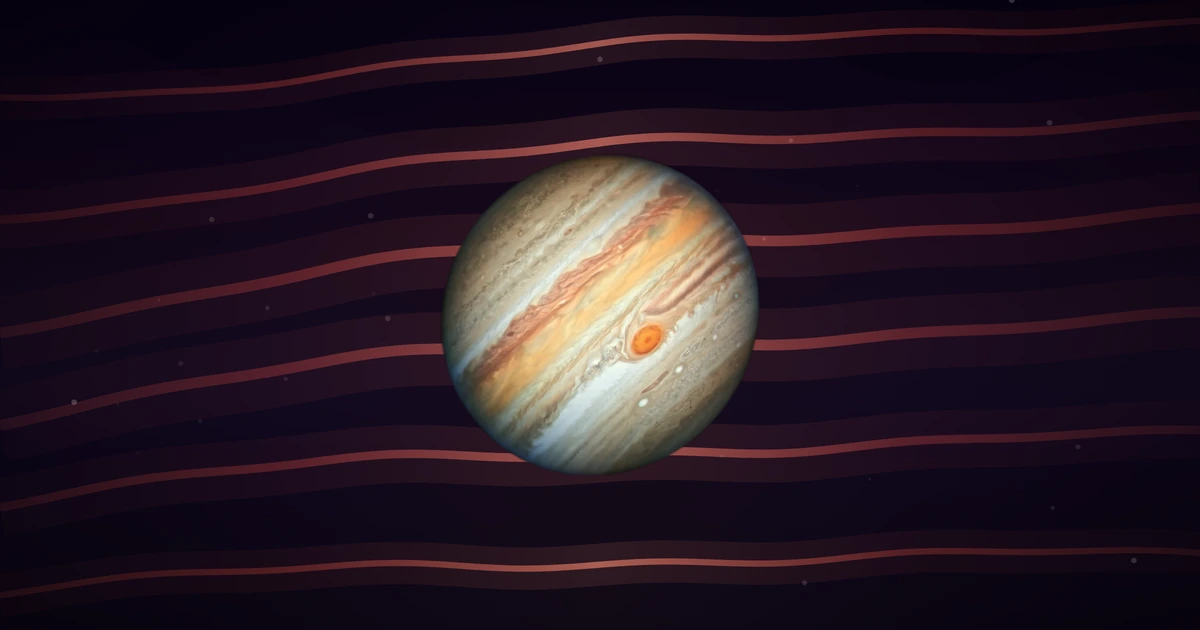
183.58 Hz benefits: Jupiter's tone and where its meanings come from
183.58 Hz benefits are symbolic: the Jupiter tone is its 11.86-year orbit raised 36 octaves, and no study has tested it. Where the meanings come from.
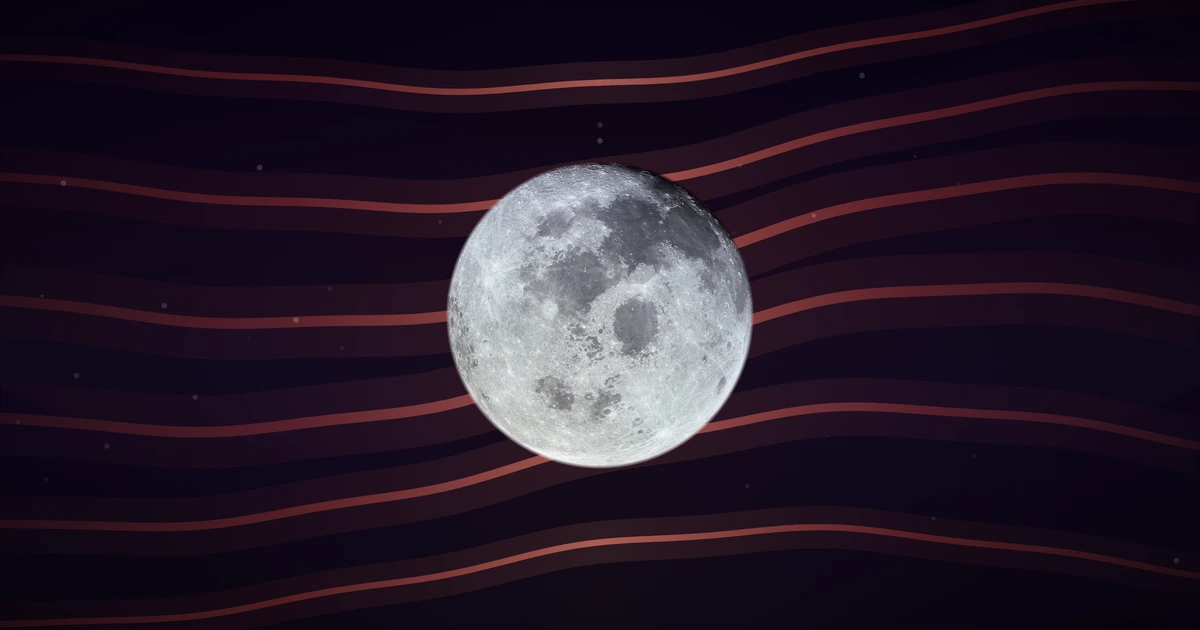
210.42 Hz benefits: what the Moon tone is, and what is known
210.42 Hz benefits are symbolic: the Moon tone is the 29.53-day lunar month raised 29 octaves, and no study has tested it. Where the claims come from.
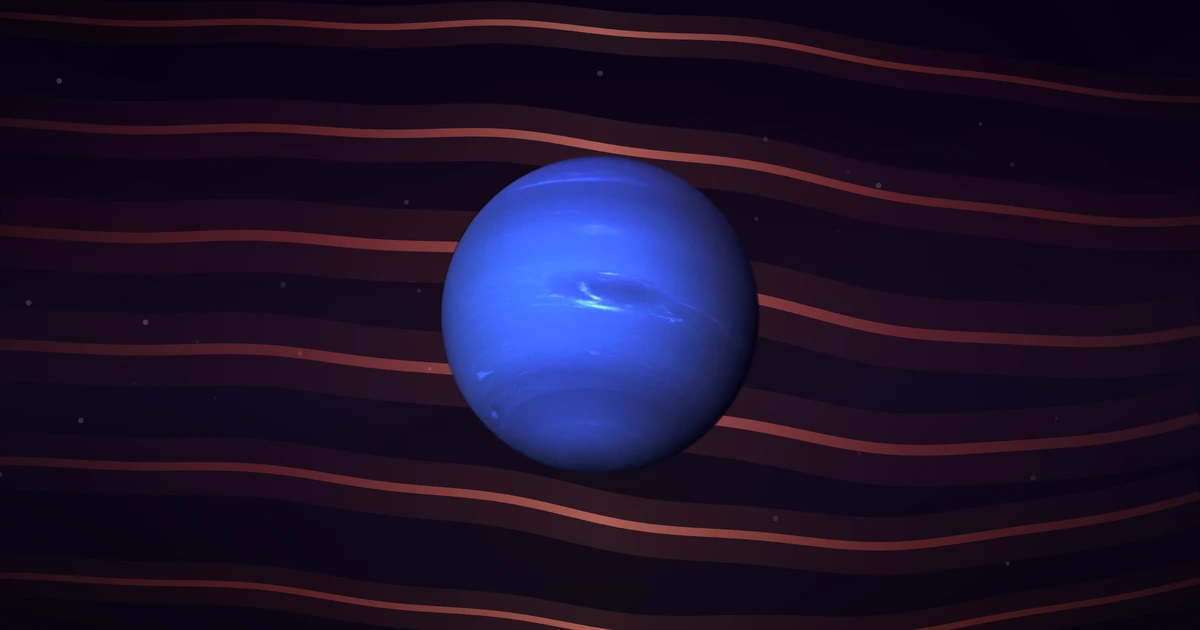
211.44 Hz benefits: Neptune's tone and where its meanings come from
211.44 Hz benefits are symbolic: the Neptune tone is its 164.8-year orbit raised 40 octaves, and no study has tested it. Where the meanings come from.
Just be curious. This is not a medical device or medical advice. For any health concern, please speak to your doctor.