172.06 Hz benefits: the Platonic year tone, and what is known
172.06 Hz is the Platonic year tone of Hans Cousto's cosmic octave: the precession of the equinoxes, the slow turn of the Earth's axis against the stars, taken as 25,920 years and raised 47 octaves until it can be heard, as a low F. The benefits linked to it, clarity of mind and the crown chakra, come from Cousto's notes. No study has tested 172.06 Hz itself.
Ready to play Earth Platonic Year 172.06 Hz
Look beyond today for a little perspective.
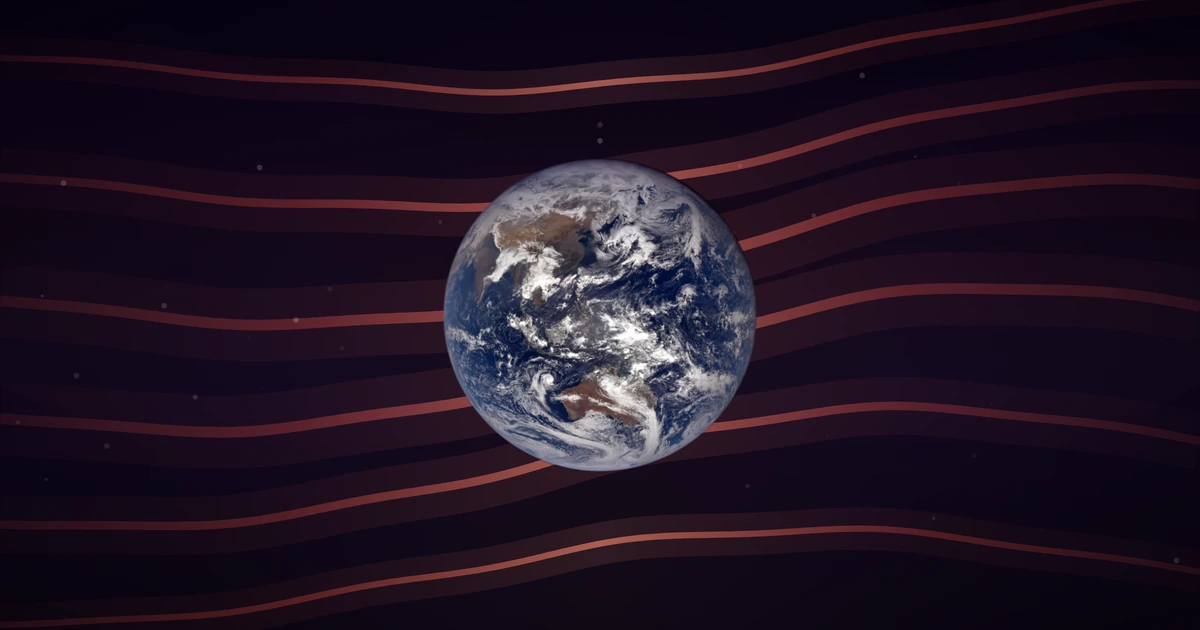
What benefits are claimed for 172.06 Hz?
The benefits come from one source: Hans Cousto's own notes on the tone. His text, reprinted on Planetware's page on the Platonic year, in German, gives 172.06 Hz to Sahasrara, the crown chakra, and says it "Fördert das Heitere und Klare im Geiste": it furthers what is serene and clear in the mind. He suggests meditation music tuned to it for the spiritual path, and adds that F, the note it sits on, was the ground tone of music in ancient China.
That is the source of the crown chakra link, which Harmonance's own older video of this tone carried in its title. These are a tradition's meanings, and no study has tested them. Harmonance places the tone on its spirituality page beside 963 Hz, as a sound for quiet, reflective listening, and leaves what it means to you to you.
Where does 172.06 Hz come from?
From the slowest motion the Earth makes. Besides spinning once a day and circling the Sun once a year, the Earth wobbles like a top, and its axis traces a slow turn against the stars. NASA's page on the Milankovitch cycles puts the cause in the Sun's and Moon's pull on the Earth's equatorial bulge, and gives the length: "The cycle of axial precession spans about 25,771.5 years."
As the axis turns, the two points where the Sun crosses the equator at the equinoxes creep backwards round the zodiac. That drift is the precession of the equinoxes, and one full turn of it is what Cousto calls the Platonic year. His tuning tables describe it plainly: "The point of intersection, also called the vernal equinox, moves once through the ecliptic (zodiac) in 25 920 years."
Read as a vibration, one turn in 25,920 years is about 0.0000000000012 Hz. Doubling a frequency raises it one octave, so Cousto doubles it until it can be heard. After 43 doublings it is still only 10.75 Hz. The 44th brings it to 21.51 Hz, just inside hearing, and the 47th to 172.06 Hz. The diagram follows the whole climb.

Is 172.06 Hz the 47th octave or the 48th?
Both, depending on how you count. Cousto's English tables number the doublings, so 172.06 Hz sits on line 47, with the cycle itself on line 0. His German text counts the cycle as the first octave: "Dieser Ton ist die 48. Oktave der Erdachsenpräzession", this tone is the 48th octave of the precession of the Earth's axis. The tone is the same either way: the cycle's rate multiplied by 247, which is 140,737,488,355,328.
What is the Platonic year?
The name is Plato's, but the idea he gave it to was different. In the Timaeus, Plato writes that "the perfect number of time fulfils the perfect year when all the eight revolutions, having their relative degrees of swiftness, are accomplished together and attain their completion at the same time". His perfect year is the moment the Sun, the Moon, the planets and the stars all return to where they began, not the wobble of the Earth's axis.
The wobble was found about two centuries after Plato. NASA Goddard's history of astronomy tells how "Around the year 130 BC, Hipparchus compared ancient observations to his own and concluded that in the preceding 169 years those intersections had moved by 2 degrees". He named the motion the precession of the equinoxes. The name for its full turn, the Platonic year, borrows Plato's perfect year, and the cosmic octave keeps it.
How long is the Platonic year really?
Shorter than 25,920 years. That figure is a round one: 360 degrees at one degree every 72 years. Measured today, the turn takes about 25,771.5 years on NASA's figure, and the same 47 doublings on NASA's number land at 173.05 Hz, 9.9 cents higher than Cousto's tone, about a tenth of a semitone.
Hipparchus's own numbers would have given a very different tone. Two degrees in 169 years, kept up for a whole turn, makes 30,420 years, and doubled 47 times that is 146.61 Hz, 277 cents below 172.06 Hz, nearly a minor third lower. NASA's climate page also names a second, shorter precession cycle, the one that shifts the seasons against the Earth's closest approach to the Sun: "an overall precession cycle spanning about 23,000 years on average". It is a different motion, and the table shows what it would give.
| Length of one turn | Doubled 47 times |
|---|---|
| Cousto's tradition: 25,920 years | 172.06 Hz |
| Rounded: about 26,000 years | 171.53 Hz |
| NASA, today: about 25,771.5 years | 173.05 Hz |
| Hipparchus's pace: 30,420 years | 146.61 Hz |
| The climate's precession: about 23,000 years | 193.90 Hz |
Does the Platonic year always last the same time?
No. The pace of the wobble drifts over the ages, so a full turn takes longer in some eras than in others. Harmonance computed it with the long-term precession model of Vondrák, Capitaine and Wallace, which the IAU's standard astronomy library carries in two routines, one for the ecliptic and one for the equator. Its notes say the model "agrees with the IAU 2006 precession at J2000.0" and is accurate to a few arcseconds through recorded history.
At the start of 2000 the model gives the equinoxes a pace of 50.29 arcseconds a year, a full turn of 25,771.6 years, which is NASA's figure. Today a turn would take 25,769 years, a tone of 173.07 Hz. Go back to about 7900 BC and a turn took 26,489 years, a tone of 168.36 Hz. Go forward to about AD 11,500 and it will take 25,081 years, a tone of 177.81 Hz. Across that span the tone would move by 95 cents, nearly a semitone.
So Cousto's 25,920 years was once the true pace. In the model, the equinoxes last moved at the speed of a 25,920-year turn about AD 700. The model also shows the pace rising as the tilt of the Earth's axis falls, from 24.2 degrees at the slowest turn to 22.6 degrees at the fastest.

| Year | One turn | Tone |
|---|---|---|
| 11,000 BC | 26,404 years | 168.90 Hz |
| 8000 BC | 26,489 years | 168.36 Hz |
| 5000 BC | 26,416 years | 168.82 Hz |
| 2000 BC | 26,199 years | 170.22 Hz |
| 130 BC | 26,010 years | 171.46 Hz |
| AD 1 | 25,996 years | 171.56 Hz |
| AD 2000 | 25,772 years | 173.05 Hz |
| AD 2026 | 25,769 years | 173.07 Hz |
| AD 5000 | 25,446 years | 175.26 Hz |
| AD 8000 | 25,196 years | 177.00 Hz |
| AD 11,000 | 25,084 years | 177.79 Hz |
| AD 14,000 | 25,130 years | 177.47 Hz |
Download the length of the Platonic year, century by century (CSV)
What note is 172.06 Hz?
An F, a quarter of a semitone flat. In standard tuning, with A at 440 Hz, the F below middle C is 174.61 Hz, and 172.06 Hz sits 25.5 cents beneath it. Cousto's tables call it F and give its A as 433.56 Hz.
One cycle lasts 5.81 milliseconds. Its lower octave is 86.03 Hz and the octave above 344.12 Hz. Taken as a rhythm, the 40th doubling is 80.65 beats a minute, and Cousto's tables also give the cycle a colour, red violet.
Is the Age of Aquarius about the Platonic year?
Yes: the astrological ages are slices of the same slow turn. NASA Goddard's page notes that the spring equinox once lay in Aries, and that "Around the year 1 it moved into the constellation of Pisces"; it is now moving towards Aquarius. Cousto's German text ties his tone to the same idea, the passage of the great ages and the coming of the "Wassermannzeitalter", the Age of Aquarius. The astronomy is the drift of the equinox. What an age means belongs to astrology, which no study has borne out.
What does research say about 172.06 Hz?
Nothing yet: no study has tested 172.06 Hz or any tone of the cosmic octave. The nearest evidence is about music in general. NCCIH, the United States' centre for complementary and integrative health, describes a 2020 review of 104 studies with 9,617 participants on music and measures associated with stress. The music had a small to medium effect on the body's measures and a medium to large one on how people said they felt.
Those studies used music, not one steady tone, so they say nothing about 172.06 Hz itself. NCCIH adds that "because much of the research on music-based interventions is preliminary, few definite conclusions about their effects have been reached". The Platonic year tone rests on its arithmetic and its tradition. If you listen, take what you notice as your own response.
What does the 172.06 Hz page actually play?
Two different sounds, which Harmonance measured from the audio files the page serves. Pure tone mode is a single steady peak at 172.06 Hz with two faint overtones, at 344.12 Hz, about 23 decibels quieter, and at 516.18 Hz, about 33 decibels quieter, so what you hear is one steady pitch.
Strings mode is slow string chords in a key whose home note is the Platonic year tone, with its lowest note an octave below it, at 86.03 Hz. Across the three-minute loop the loudest single note sits on the octave above, 344.37 Hz, about a hundredth of a semitone from 344.12 Hz. The exact tone plays underneath, about 37 decibels quieter than in pure tone mode.
How do you listen to the Platonic year tone?
Press play at a low volume and let it run for a few minutes. Pure tone mode is one steady pitch, so any speakers or headphones will do. To hum along, find the low F in your voice, or the octave above, 344.12 Hz, if your voice sits higher.
The 172.06 Hz Platonic year page plays the tone for as long as you leave it running. Harmonance Studio lets you layer it with the Earth's other two tones: the day, 194.18 Hz, which the Earth frequency guide explores, and the year, 136.10 Hz, which Cousto called Om and the Om frequency guide follows. The Moon tone guide works the lunar month the same way, the guide to planetary frequencies sets out the whole cosmic octave, and the planetary collection holds every tone in the family.
Sources and limits
The arithmetic comes from Cousto's tables and NASA's figures. The chart of the Platonic year's length is Harmonance's own, computed with the IAU's long-term precession model, and so are the measurements of what the page plays, made from its own audio files. No study has tested the Platonic year tone, and the research on music in general says nothing about it.
- Hans Cousto, tuning data for the planets: the Platonic year of 25,920 years, its octaves, note, tempo and colour.
- Hans Cousto, the Platonic year tone (in German): the 48th octave, the crown chakra and his meanings for the tone.
- NASA, Earth fact sheet: the tropical year of 365.242 days behind the conversion to seconds, and the axis's tilt of 23.44 degrees.
- NASA, Milankovitch cycles and their role in Earth's climate: the axial precession of about 25,771.5 years and the climate's cycle of about 23,000.
- NASA Goddard, From Stargazers to Starships: Precession: Hipparchus's discovery and the equinox's passage into Pisces.
- Plato, Timaeus, translated by Benjamin Jowett: the perfect year.
- Vondrák, Capitaine and Wallace (2011), New precession expressions, valid for long time intervals: the model behind the chart.
- The IAU's standard library, long-term precession of the ecliptic and of the equator: the model's coefficients and accuracy.
- NCCIH, Music and health: what research on music does and does not show.
Tones to play while you read
Related guides
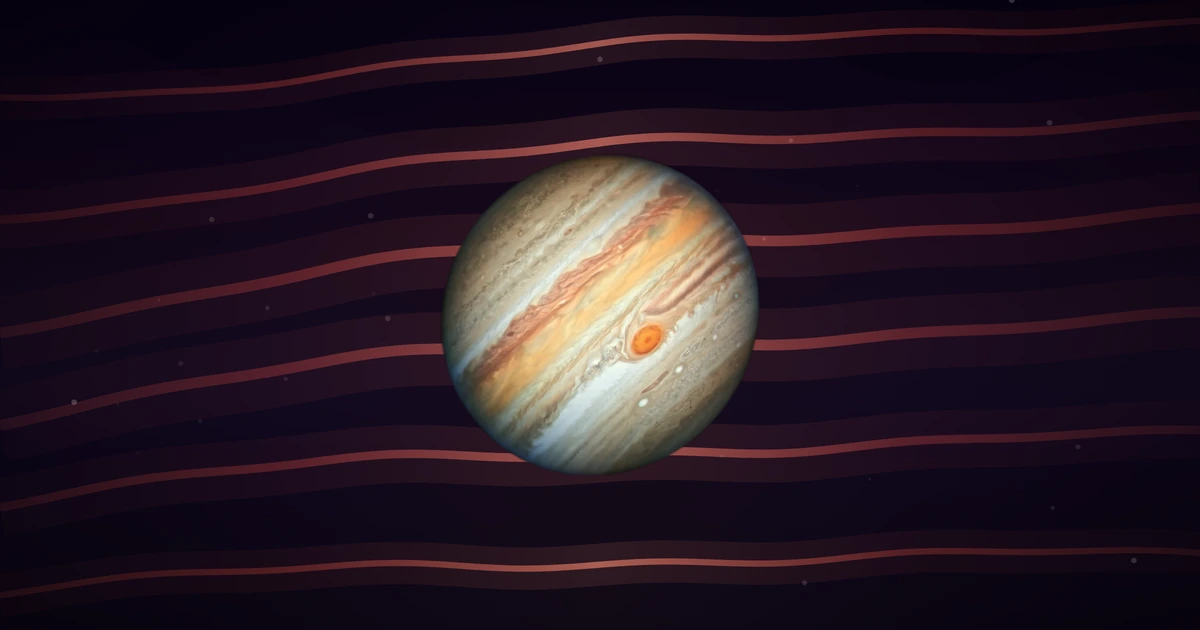
183.58 Hz benefits: Jupiter's tone and where its meanings come from
183.58 Hz benefits are symbolic: the Jupiter tone is its 11.86-year orbit raised 36 octaves, and no study has tested it. Where the meanings come from.
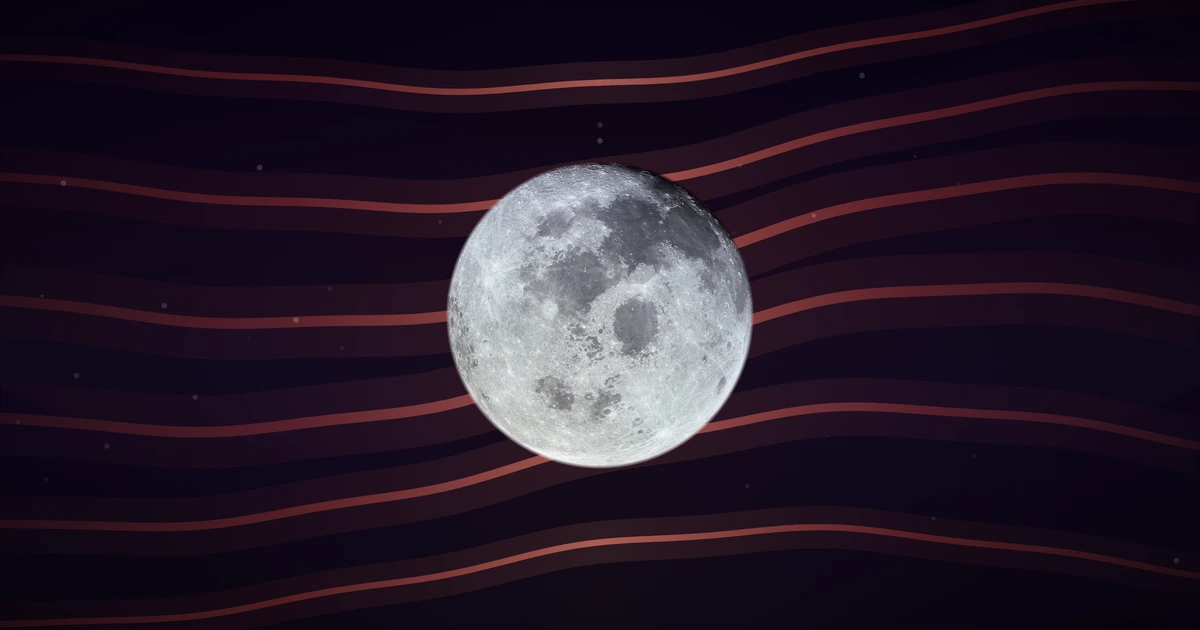
210.42 Hz benefits: what the Moon tone is, and what is known
210.42 Hz benefits are symbolic: the Moon tone is the 29.53-day lunar month raised 29 octaves, and no study has tested it. Where the claims come from.
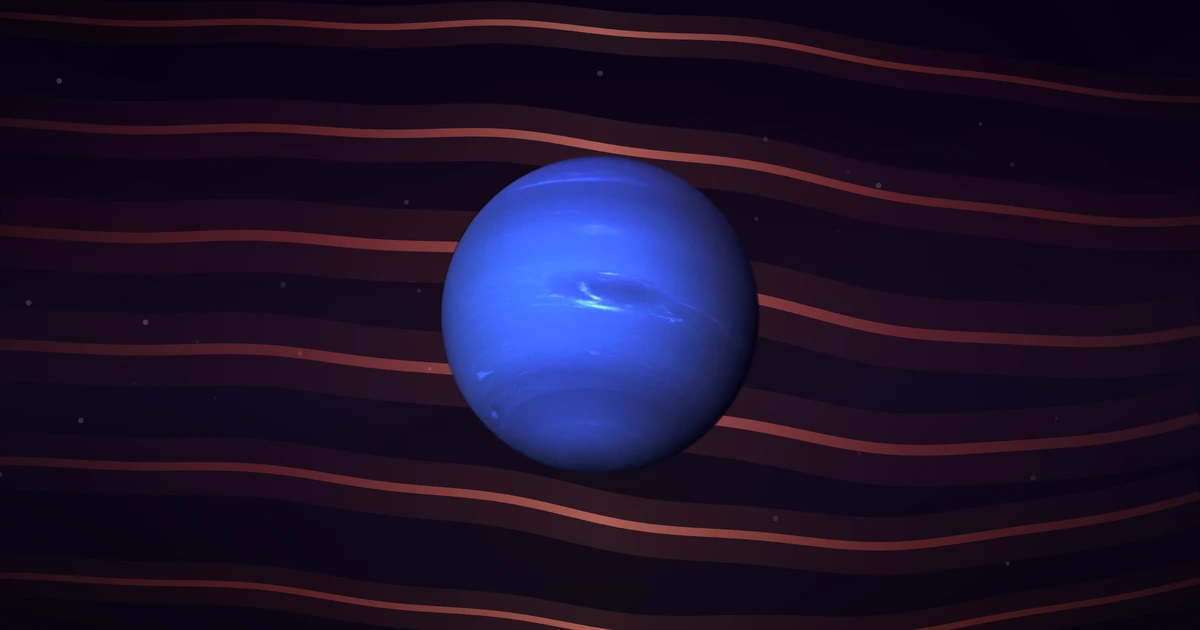
211.44 Hz benefits: Neptune's tone and where its meanings come from
211.44 Hz benefits are symbolic: the Neptune tone is its 164.8-year orbit raised 40 octaves, and no study has tested it. Where the meanings come from.
Just be curious. This is not a medical device or medical advice. For any health concern, please speak to your doctor.