Law of attraction frequency: the Jupiter and 963 Hz pairing
No frequency has been shown to bring a wish about. Harmonance's Jupiter and 963 Hz pairing joins 183.58 Hz, Hans Cousto's tone for Jupiter, the planet astrology links with luck and expansion, and 963 Hz, the highest of the nine Solfeggio numbers. In experiments, picturing a goal as already won left people with less energy, while weighing it against its obstacles helped them act on it.
Ready to play Jupiter 183.58 Hz
Think of something you would like to offer someone.
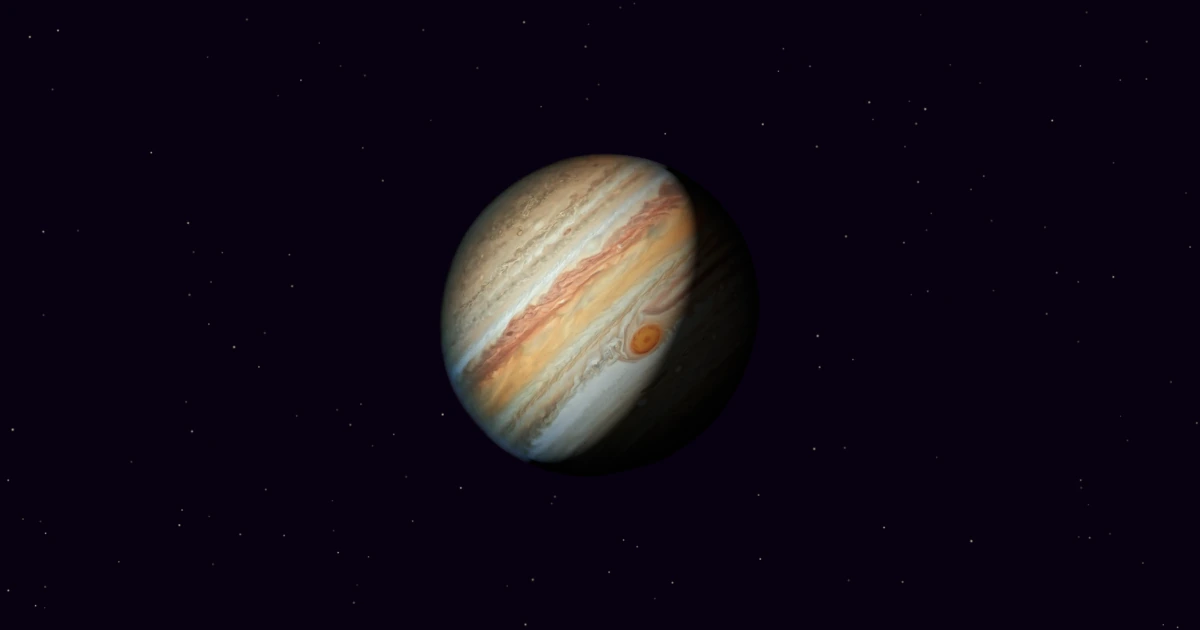
Is there a law of attraction frequency?
Not one that has been tested. No study has played 183.58 Hz, 963 Hz or the two together to people and then measured whether their wishes came true, and the idea that a thought has a frequency of its own has never been measured at all.
What exists is a pairing with a story behind each half. It comes from a video on Harmonance's YouTube channel, one of nine fusions each named for a state of mind, which joins Jupiter at 183.58 Hz with the Solfeggio tone 963 Hz. People reach for a sound like this while they write down what they want, picture it or say it out loud.
This guide takes the pairing apart. It traces where the talk of thought vibrations began, shows where each number comes from, measures what the ear does with the two tones together from the site's own audio, and sets out what psychologists have found when they studied wishing, picturing and planning, which is more useful than any tone.
Where does the idea of a thought frequency come from?
It comes from a book published in Chicago in 1906. William Walker Atkinson, a writer of the New Thought movement, called it Thought Vibration, or The Law of Attraction in the Thought World, and its opening chapter makes the claim that later turned into talk of frequencies:
When we think we send out vibrations of a fine ethereal substance
Atkinson went further. Thought, he wrote, differs from light and heat only in speed: "the difference is solely in the rate of vibration". A rate of vibration is a frequency, so in his picture every thought has one. He also admitted that nobody could detect it, and asked readers to accept it anyway: that no one can "weigh or measure these vibrations is no proof that they do not exist".
The idea travelled a long way. Three psychologists at the University of Queensland, Dixon, Hornsey and Hartley, trace the modern belief through writers of success books in the twentieth century to Rhonda Byrne's 2006 book The Secret, and they cite Atkinson's book, beside Byrne's, for its language of energy and vibration. They define the belief as "the ability to cosmically attract success in life through positive self-talk, visualization, and symbolic actions", and note that "many of these claims and strategies remain untested or are pseudoscientific".
So when a video offers a frequency for the law of attraction, it borrows a word from physics for an idea from 1906. A tone is a real vibration of the air that a microphone can record. A thought vibration, in Atkinson's sense, is not something any instrument has found.
Why Jupiter?
Because astrology has called Jupiter the lucky planet for two thousand years. The Roman poet Manilius described it as temperate and benign, and Western astrologers still call it the greater benefic; a summary of the tradition says it is "associated with luck and expansion". Harmonance's zodiac pages for Sagittarius and Pisces, the two signs astrology gives it, both play its tone.
The tone itself is arithmetic. NASA's Jupiter fact sheet times one orbit against the stars at 4,332.589 days. Count that orbit as one very slow cycle, double it 36 times, and it reaches 183.58 Hz, close to the F sharp below middle C. Hans Cousto worked it out, and his tuning tables list the result as an F sharp 13.34 cents below the piano's, where a cent is a hundredth of a semitone.
Cousto gave the tone a meaning in one line of German on his page for Jupiter:
Fördert die Gestaltungskraft und das stetig Aufbauende.
In English: it encourages the power to shape things and steady building. That is a description from a tradition, and it is closer to work than to wishing. The guide to 183.58 Hz works through Jupiter's arithmetic in full, with the planet's path through the zodiac from NASA's own positions.
Why 963 Hz?
Because it is the highest of the nine Solfeggio numbers, and the one most often linked with the crown of the head and with oneness. It was not part of the original set. The 1999 book that began the Solfeggio numbers announced only six, in its publisher's words "a series of six electromagnetic sound frequencies", and 963 was not among them.
Within a few years others had added three more. A tuning fork maker's page, saved by the Internet Archive in 2012, asks "Why 6 forks when others have gone to 9?", and a trademark application filed in February 2007 lists all nine, "396, 417, 528, 639, 741, 852, 963, 174, and 285". Harmonance's own 963 Hz page describes it as a tone associated with stillness, unity and contemplative listening.
The guide to 963 Hz tells its story whole, with the two small listening studies that have used it, and the guide to the Solfeggio frequencies covers the whole set, tone by tone.
Is 963 Hz an octave of Jupiter?
No. Keep doubling the Jupiter tone and the ladder runs 183.58, 367.15, 734.31 and 1,468.62 Hz. 963 Hz falls between the last two, so it is not one of Jupiter's octaves.

The sum is short enough to redo. 2 to the power 36 is 68,719,476,736. Divide it by the Jupiter year in seconds, 374,335,690, and the answer is 183.577 Hz, which rounds to Cousto's 183.58 Hz; his own year of 4,332.588 days gives the same.
As an interval, 963 Hz is 5.246 times 183.58 Hz, or 2,869 cents: two octaves and a fourth, played 31 cents narrow. On the piano that is close to an F sharp and the B two octaves and a fourth above it, with 963 Hz sitting 44 cents below the B at 987.77 Hz. The pairing was chosen for what each number means, not for a musical ratio, and it happens to land near a fourth.
What happens when the two tones play together?
They stay out of each other's way, and one of them sounds much louder than the other. Harmonance measured both from the two pages' own audio files, played together at the levels the pages use.
The inner ear sorts sound by pitch along a coiled membrane, and each place along it acts like a filter. In 1965 Reinier Plomp and Willem Levelt played pairs of pure tones to listeners and found where roughness comes from:
These intervals are evaluated as consonant for frequency differences exceeding critical bandwidth, whereas the most dissonant intervals correspond with frequency differences of about a quarter of this bandwidth.
The width of those filters is measured in Cams, after the formulas of Glasberg and Moore: every filter is one Cam wide, and each Cam is about 0.89 mm along the membrane. Jupiter sits at 5.47 Cams and 963 Hz at 15.34 Cams: 9.86 Cams apart, about 8.8 mm along the inner ear, so far apart that by Plomp and Levelt's finding they cannot roughen each other.
Each page's tone also carries two faint harmonics, at twice and three times its pitch, 23.1 dB and 34 dB below it. None of the six lines shares an ear filter with another; the closest two are both Jupiter's own harmonics, 2.49 Cams apart. On the roughness measure Harmonance uses for its own sound, the pair scores 0.07% of the roughest possible pair of equal tones near 183.58 Hz, and nothing else in the mix comes within 54 dB of the tones.

| Line | Loudness | Place in the ear |
|---|---|---|
| 183.58 Hz, Jupiter | 2.21 sones | 5.47 Cams |
| 367.16 Hz, Jupiter, 2nd harmonic | 0.68 sones | 8.90 Cams |
| 550.74 Hz, Jupiter, 3rd harmonic | 0.37 sones | 11.39 Cams |
| 963 Hz, the Solfeggio tone | 5.29 sones | 15.34 Cams |
| 1,926 Hz, 963 Hz's 2nd harmonic | 1.08 sones | 20.84 Cams |
| 2,889 Hz, 963 Hz's 3rd harmonic | 0.67 sones | 24.27 Cams |
Download the measurements (CSV)
The two tones leave the pages at the same level, but the ear is less sensitive to low pitches. In the equal-loudness model (ISO 226) that Harmonance uses for its own sound, Jupiter reads 51.4 phon and 963 Hz 64.0 phon. On the sone scale, where 2 sones sounds twice as loud as 1, that is 2.21 against 5.29: 963 Hz sounds 2.4 times as loud as the tone it is paired with.
Even 963 Hz's faint second harmonic, at 1,926 Hz, sounds about half as loud as Jupiter itself. So if you play the two together and want Jupiter to carry the pair, set 963 Hz about 12.6 dB lower, roughly a quarter of its level.
What does research say about picturing what you want?
The research points the other way from the law of attraction: enjoying a picture of the goal as already won went with less effort, not more. Most of it comes from Gabriele Oettingen and her colleagues at New York University.
What they looked at. In 2002 Oettingen and Mayer followed four groups, among them graduates looking for work, students with a crush and undergraduates facing an exam. They separated two ways of thinking about the future: expecting a good outcome, and enjoying fantasies of it. Then they measured effort and results weeks or months later, up to two years.
What they found. The two ways of thinking pulled in opposite directions. In the authors' words:
Positive expectations (judging a desired future as likely) predicted high effort and successful performance
Positive fantasies, the pleasant pictures of the goal already won, went the other way: the more people enjoyed them, the less effort they made and the worse they did.
In 2011 Heather Barry Kappes and Oettingen tested the reason in four experiments. People asked to picture an idealised future showed less energy, measured both in the body and in what they did, than people who pictured the same future with doubts, negatively or neutrally. In their words, positive fantasies "do not generate energy to pursue the desired future".
What it does not show. These were students, job seekers and a few other groups, each thinking about one goal, and the energy was measured in a laboratory. The studies do not show that hope is harmful, and the expectation that something is likely was the helpful part. None of them played a tone.
Why it matters for listening. If a sound is part of how you think about what you want, the research suggests using that time to picture the obstacles too, not only the finish line.
What helped people reach their goals instead?
Weighing the wish against what stands in the way, then making a plan for it. Oettingen calls the first step mental contrasting, and taught with an if-then plan it is known as WOOP, short for wish, outcome, obstacle, plan.
A 2021 review pooled the studies of the method. It found 21 studies with 24 measured effects and 15,907 people, and across them the method helped people reach their goals "with a small to medium effect size (g = 0.336)". The authors add a warning of their own: "because of some publication bias, the actual effect sizes may be smaller".
A small effect is still an effect, measured over many studies. The tones have no result of any size, because nobody has tested them.
What do studies of people who hold the belief find?
That believers feel more successful, but take more risks. Dixon, Hornsey and Hartley built a scale for the belief and tried it in three studies with 1,023 people between them. Over a third agreed with it.
Those who scored higher saw themselves as more successful, aimed higher and expected more success to come. They were also, in the authors' words, "more likely to be drawn to risky investments, have experienced bankruptcy, and to believe they could achieve an unlikely level of success more quickly". A survey like this shows what goes together, not what causes what, and it says nothing about sound.
The guide to the science of sound healing sets out what research on sound and music has and has not found more widely. The US National Center for Complementary and Integrative Health sums up music research plainly:
However, because much of the research on music-based interventions is preliminary, few definite conclusions about their effects have been reached.
How do you listen to the Jupiter and 963 Hz pairing?
Play each tone on its own page, or both together in Studio. On the 183.58 Hz Jupiter page, press play to hear the tone; switch Strings on beside the player and strings tuned to octaves of 183.58 Hz play, with the tone itself quietly underneath. The 963 Hz page plays the other half. Nothing plays until you press play, and no account is needed.
To hear the two at once, open Harmonance Studio, which plays several tones together after a free sign-in. Set 963 Hz well below Jupiter so the pair sounds about even. Then, while it plays, try the four steps the research supports: write down one wish, the best outcome of it, the main obstacle inside you, and what you will do when that obstacle turns up. No study sets a length or promises a result, so notice what you notice.
Keep the volume low. Loud listening is the one risk that is well established: the National Center for Complementary and Integrative Health notes that "listening to music at too high a volume can contribute to noise-induced hearing loss", and the World Health Organization's safe listening advice is that "you can safely listen to a sound level of 80dB for up to 40 hours a week", with your device's volume at no more than 60% of maximum.
Both tones belong to larger sets. The planetary collection plays Jupiter beside the other planets, and the Solfeggio collection plays 963 Hz with its eight companions. Jupiter also appears on the Want to reflect page, for a quiet moment to think something over.
For other ways in, the guide to planetary frequencies explains Cousto's method for every planet, the guide to astrology and frequencies shows how the planetary tones are paired with the signs, the guide to the Mars and 396 Hz pairing takes apart another of the nine fusions, and the Studio guide shows how to build and save a mix.
Sources and limits
The history of the idea rests on Atkinson's own 1906 text and on the University of Queensland study that traces it. The story of each number rests on primary records: NASA's fact sheet and Cousto's own tables and page for the Jupiter tone, astrology's tradition for its meaning, and the 1999 press release, a 2012 tuning fork page and a 2007 trademark record for 963 Hz. No study has tested either tone, or the pair, on reaching a goal. The research described is about fantasies, expectations and planning, and about people who hold the belief; none of it used sound. The measurements of the two pages' sound are Harmonance's own, made from the site's audio files, and the loudness comparison comes from a model of an average ear, not from listeners.
- William Walker Atkinson (1906), Thought Vibration, or The Law of Attraction in the Thought World, The New Thought Publishing Co., Chicago, scanned by the Internet Archive: thought as vibration.
- Dixon, Hornsey and Hartley (2023), a study of the belief that thought attracts success, Personality and Social Psychology Bulletin: where the belief came from and who holds it.
- Oettingen and Mayer (2002), The motivating function of thinking about the future: expectations versus fantasies, Journal of Personality and Social Psychology: four groups followed for up to two years.
- Kappes and Oettingen (2011), Positive fantasies about idealized futures sap energy, Journal of Experimental Social Psychology: four experiments on fantasy and energy.
- Wang, Wang and Gai (2021), A Meta-Analysis of the Effects of Mental Contrasting With Implementation Intentions on Goal Attainment, Frontiers in Psychology: 21 studies of weighing a wish and planning for it.
- NASA, Jupiter fact sheet: the orbit of 4,332.589 days.
- Hans Cousto, tuning data for the planets: Jupiter's 36th octave, 183.58 Hz, an F sharp.
- Hans Cousto, Jupiter, 183.58 Hz (in German): the meaning his text gives the tone.
- Wikipedia, planets in astrology: Jupiter as the greater benefic, associated with luck and expansion.
- Tetrahedron Publishing (1999), press release for Healing Codes for the Biological Apocalypse, Internet Archive copy: the six original numbers.
- SomaEnergetics, Ancient Solfeggio Energy Tuners, Internet Archive copy from 2012: others had gone from six tones to nine.
- United States Patent and Trademark Office, trademark application 77099679: all nine numbers, filed in 2007.
- Plomp and Levelt (1965), Tonal consonance and critical bandwidth, Journal of the Acoustical Society of America: tones further apart than a critical band sound consonant.
- Moore (2014), Development and current status of the Cambridge loudness models, Trends in Hearing: the ear's filter widths and the Cam scale.
- National Center for Complementary and Integrative Health, Music and Health: What You Need To Know: the state of music research, and loud listening.
- World Health Organization, Deafness and hearing loss: safe listening: safe levels and device volume.
Tones to play while you read
Related guides
111 Hz benefits and the ancient chamber story
111 Hz benefits, checked: the angel number behind the tone, the stone chambers that ring near 110 Hz, and what a pilot found when 30 adults listened.
141.27 Hz benefits: what the Mercury frequency is and is not
141.27 Hz benefits, checked: the Mercury tone is its 88-day orbit raised 30 octaves, its spin sounds the fifth above, and no study has tested it.

174 Hz benefits: the claims and what is known
174 Hz benefits, checked: the comfort and natural anaesthetic claims, where the number came from, and how 37 listeners rated the lowest Solfeggio tone.
Just be curious. This is not a medical device or medical advice. For any health concern, please speak to your doctor.