Frequency guide
Listening context
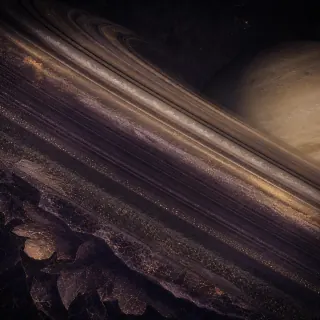
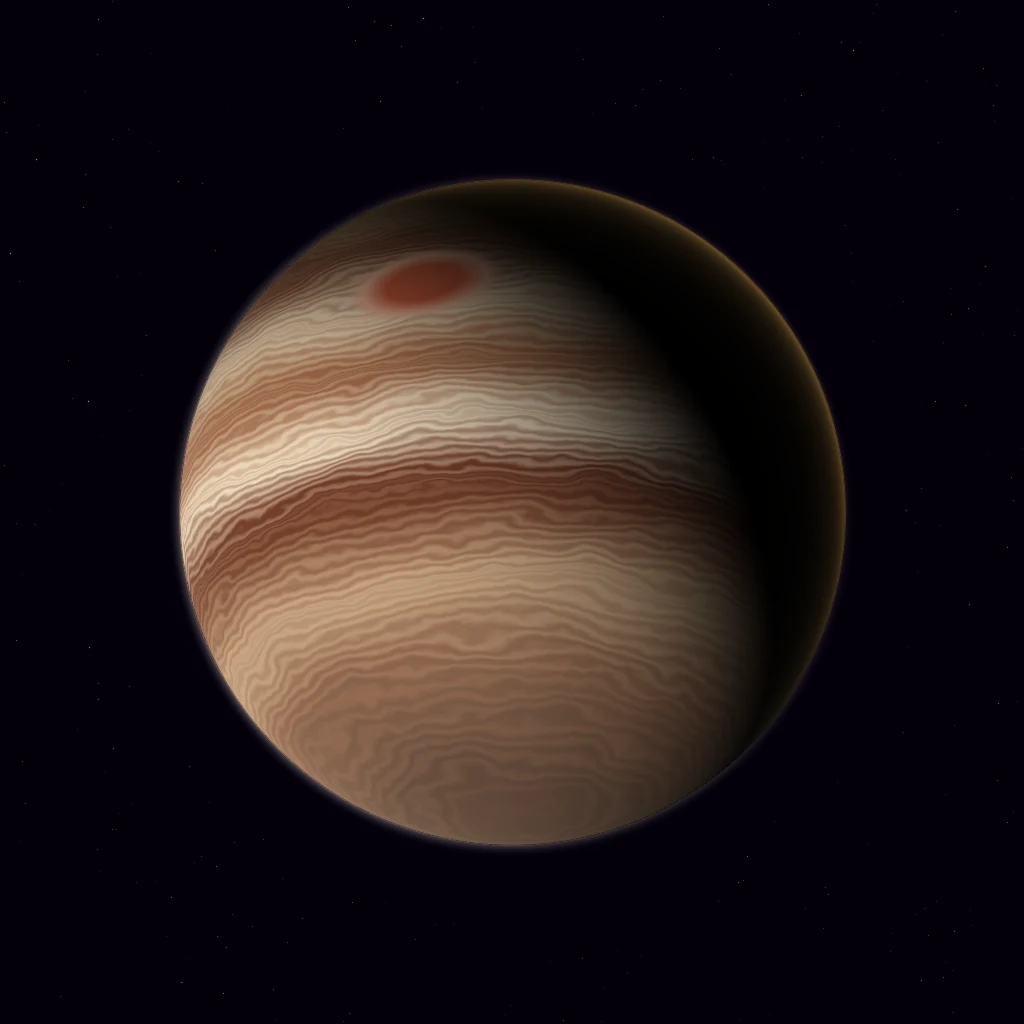
183.58 Hz is the tone that Hans Cousto's cosmic-octave system assigns to Jupiter, by far the largest planet in the solar system. The pitch sits near a low F-sharp in standard tuning and has a full, rounded character that many listeners describe as roomy or expansive.
Origin: the astronomy and the octave maths
Cousto's method converts a real orbital period into an audible pitch by doubling its frequency through octaves. Doubling raises a tone by exactly one octave, so even a cycle of many years can be lifted into the hearing range while keeping its proportions intact.
Jupiter orbits the Sun once every 11.86 Earth years, a stately journey for a world more than 300 times the mass of Earth and wide enough to hold all the other planets inside it. Cousto read that long period as a very low frequency and doubled it through thirty-six octaves, arriving at about 183.58 Hz. Because the orbit is so slow, the maths takes many doublings to reach a pitch we can hear. The tone is a translation of orbital motion into sound, not a recording: space is nearly empty, and sound needs a medium to travel.
Tradition and mythology
Jupiter takes its name from the king of the Roman gods, Zeus to the Greeks, ruler of the sky and wielder of the thunderbolt. Fittingly, the largest planet was tied to greatness, expansion, and good fortune. In Vedic astrology Brihaspati, or Guru, is the teacher of the gods, associated with wisdom, guidance, and learning. Western astrology has long linked Jupiter to growth, generosity, and a broad, optimistic outlook. Cousto's tone preserves that sense of breadth in a single rounded reference pitch.
Jupiter's sheer scale is hard to overstate. It is a gas giant with no solid surface to stand on, banded with stripes of cloud and crowned by the Great Red Spot, a storm wider than the whole Earth that has raged for centuries. It holds at least ninety-five known moons, four of them, the Galilean moons, large enough that Galileo spotted them through a simple telescope in 1610, the first worlds ever seen circling another planet. That discovery helped overturn the idea that everything must orbit the Earth. So much grandeur in one body suits the king-of-the-gods symbolism the planet has always carried, and gives the slow, rounded tone its expansive feel.
How listeners use it
- A wide, slightly buoyant quality, more like a slow exhale than a sharp focus tool.
- A sense of mental room to consider bigger questions without rushing for answers.
- Background suitability for study, planning, or thinking through long-term decisions.
- A friendly companion to a cup of tea and a quiet hour of reading.
What the evidence says
NCCIH’s overview concerns music-based interventions. Our inference is that this evidence does not establish a clinical benefit from this isolated 183.58 Hz tone. Personal enjoyment is a listening response, not a clinical measurement. Read the music research and its limits.
How to listen
- Set the volume to a level that fades easily into the background of your room.
- Try sessions of fifteen to thirty minutes if you want the tone to settle.
- Use it alongside writing prompts about what you would like to grow toward.
- Combine with a slow walk indoors or stretching to widen out the practice.
- Take it off if your attention scatters instead of widening.
183.58 Hz: The Jupiter Tone in Cousto's Planetary System
183.58 Hz is the tone that Hans Cousto's octave-tuning system assigns to Jupiter, the largest planet in the solar system. The figure is derived from Jupiter's orbital period of roughly twelve Earth years, octave-shifted upward many times until the result falls within the audible range. Acoustically it sits near a low F-sharp in standard tuning and has a full, rounded character that many listeners describe as roomy or spacious. This piece is a grounded look at where the tone comes from, what listeners often describe, and how a curious listener can fold it into a small, repeatable practice.
Where this frequency comes from
Cousto’s cosmic-octave writing sets out the philosophy and the maths behind the planetary tuning system. The idea is that any steady recurring motion in nature can be expressed as a tone if it is octave-shifted enough times. Jupiter, with its long twelve-year orbit, needs many doublings to bring the result into human hearing range; the final figure of 183.58 Hz is the audible end of that long calculation.
In older astrological systems, Jupiter has long been linked with growth, generosity, study, and a broad, open outlook on the world. In Hindu astrology the same planet, called Brihaspati or Guru, is associated with guidance, wisdom, and learning. Cousto's tuning preserves that older symbolism by giving Jupiter its own sounded reference. Among the planetary tones, 183.58 Hz is one of the more popular choices for listeners who want a backdrop that feels open and roomy rather than tightly focused.
As with all the planetary tones, it is worth being clear about what kind of system this is. Sound does not travel through the near-vacuum of space, so 183.58 Hz is not the literal noise of Jupiter. It is a creative mathematical translation that gives a far-away orbit something we can hear here on Earth. The meanings attached to it come from older traditions and modern symbolic readings, not from physics. That is a useful frame to hold while listening: the tone is interesting because of the long conversation it sits inside, not because the planet is broadcasting a pitch.
Symbolic threads
Across many older systems, Jupiter has been read as the planet of broad horizons. It carries themes of long-term study, slow growth, generosity, and a steady kind of optimism that is not naive but is not anxious either. Some traditions paired Jupiter with rulership, others with teachers and scholars, others with the loose idea of a benevolent presence in the sky. The image that recurs is one of expansiveness: a sense of room to move, room to think, and room to consider bigger questions without rushing for answers.
Contemporary listeners drawing on those older threads sometimes connect the 183.58 Hz tone to reflective practices that need a little more breathing room than tightly focused work. Long-form journaling, planning sessions, study, slow reading, and the kind of thinking that benefits from a wandering mind all sit comfortably with this tone in the background. You do not need to accept any particular astrological reading to find that symbolism useful as a listening cue.
How people describe listening to it
Subjective reports from listeners vary, but recurring notes include:
- A wide, slightly buoyant quality, more like a slow exhale than a sharp focus tool.
- A sense of mental room to consider bigger questions without rushing for answers.
- Background suitability for study, planning, or thinking through long-term decisions.
- A friendly companion to a cup of tea and a quiet hour of reading.
- An accommodating tone that does not push hard for foreground attention.
- A pleasant pairing with slower stretching or a long, easy walk indoors.
How to use it in a listening practice
A simple, steady practice with the Jupiter tone might look like this:
- Set the volume to a level that fades easily into the background of your room.
- Try sessions of fifteen to thirty minutes if you want the tone to settle.
- Use it alongside writing prompts about what you would like to grow toward.
- Combine it with a slow walk indoors or some gentle stretching to widen the practice.
- Vary the time of day and notice whether morning or evening suits you better.
- Step away from the tone if you find your attention scattering instead of widening.
Honest limits
The Jupiter tone is a symbolic and educational reference, not a guide to outcomes in your life. Growth in any real sense comes with effort, patience, and the slow accumulation of small choices over time; a sound on its own does not promise anything. Research on the effects of specific pitches is still very early, and the older symbolism around Jupiter is best held as a story you find useful rather than as a literal claim about what a sound can do.
Use 183.58 Hz as a small, repeatable cue inside a wider practice, and please seek qualified support for any important questions about health, work, or relationships that ask for more than a quiet listening session. Sound and music sit alongside many other ways people slow down and pay attention; they are not a replacement for professional help when something in your life calls for it.
Where this fits in the Harmonance library
The 183.58 Hz tone sits in the planetary section of the Harmonance frequency library, alongside the warmer Sun reference at 126.22 Hz, the brighter Mars tone at 144.72 Hz, and the softer Neptune pitch further out. Many listeners enjoy moving between two or three planetary tones across a week, comparing how the warmer references settle them differently from the brighter or roomier ones. Others stay with a single favourite for long stretches.
You may also want to compare this tone with the angel-number references in the library, such as 222 Hz or 333 Hz, which sit in similar parts of the spectrum but come from a different tradition. Held lightly, as one small ritual among many, the 183.58 Hz tone can be a friendly companion to long reading sessions, slow planning afternoons, and the kind of unhurried thinking that the rest of the week rarely makes room for.
For related reading, see planetary frequencies and Jupiter and the 888 association.
Listen with this
If this piece speaks to you, you might explore these tones gently as part of a wind-down or focus routine: 147.85 Hz Saturn 126.22 Hz Sun 888 Hz.
Sources
NCCIH’s overview concerns music-based interventions. Our inference is that this evidence does not establish a clinical benefit from one isolated listening tone. Personal enjoyment is a listening response, not a clinical measurement. Read the music research and its limits.
- NCCIH: Music and Health, What You Need To Know
- Music and attention studies (PubMed)
- Music intervention reviews (Cochrane Library)
What benefits are claimed for 183.58 Hz?
The traditional associations described above are listening themes, not measured outcomes. NCCIH’s overview concerns music-based interventions. Our inference is that this evidence does not establish a clinical benefit from this isolated 183.58 Hz tone. Personal enjoyment is a listening response, not a clinical measurement. Read the music research and its limits.
What is 183.58 Hz?
183.58 Hz means 183.58 cycles per second. Cousto doubles Jupiter's 11.86-year orbit through octaves into this tone; Jupiter is the sky-king Zeus or Jupiter, and the Vedic Brihaspati, teacher of the gods, long linked with breadth and growth.
Try the pitch, then notice
Press Play above when you are ready. Start quietly, listen briefly, and use the player’s volume control. Compare the neighbouring tones without judging one as medically superior. Stop if the sound is uncomfortable. Signed-in Studio lets you choose layers and timers; public listening needs no account.