The Earth frequency: 194.18 Hz, the tone of one day
The Earth frequency in sound healing is usually 194.18 Hz, Hans Cousto's tone for one Earth day. Read as one slow cycle, a day of 86,400 seconds doubled 24 times reaches 194.18 Hz, a slightly flat G below middle C. The name is also given to his Earth year tone, 136.10 Hz, and to the Schumann resonance near 7.8 Hz, which is radio, not sound.
Ready to play Earth Day 194.18 Hz
Pause to notice where you are in your day.
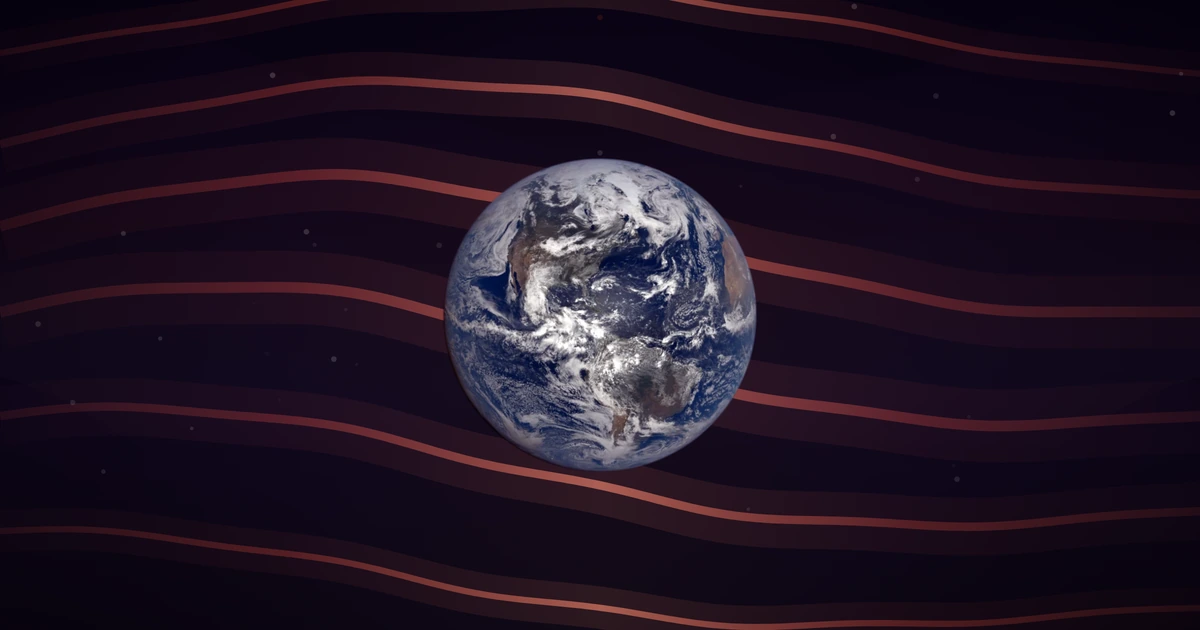
Which number is the Earth frequency?
There are several, and they measure different things. In sound healing, "the Earth frequency" most often means 194.18 Hz, the tone Hans Cousto made from the Earth's day. People also give the name to his tone for the year, 136.10 Hz, to the Schumann resonance near 7.8 Hz, and sometimes to the slow ringing of the planet itself, which seismologists call the Earth's hum.
Only Cousto's tones are sounds you can hear, and they are arithmetic: a slow cycle of the Earth, doubled until it reaches hearing. The Schumann resonance is a real, measured rhythm of the planet, but it is made of radio waves, not sound. The hum is real sound in the ground, far too slow for any ear. The diagram puts all five on one scale.

Where does 194.18 Hz come from?
From one turn of the Earth, noon to noon. NASA's Earth fact sheet gives the length of the day as 24.0000 hours, which is 86,400 seconds. Read as a vibration, that is one cycle every 86,400 seconds, about 0.0000116 Hz.
Doubling a frequency raises it one octave, the step between two notes with the same name. Double the day's rate 21 times and it reaches 24.27 Hz, just inside hearing. Double it 24 times and it reaches 194.18 Hz, which is where Cousto's planetary tuning tables put the Earth day, at its 24th octave. They define the day the same way: "The synodic day of the earth is the duration of the earth's rotation, measured from one culmination of the sun (noon) to the next."
The sum comes out unusually tidy. 86,400 is 27 × 33 × 52, so most of the doublings cancel, and the tone is exactly 131,072 divided by 675: 194.1807 Hz. Planetware's page on the Earth day tone, in German, sets out the same fraction and adds that this was the first frequency Cousto ever worked out with his cosmic octave: "Dieser Erdentag-Ton war die erste von Hans Cousto mittels der Kosmischen Oktave berechnete Frequenz".
Why the solar day and not the sidereal day?
Because the solar day is the one people live by, from one noon to the next. Measured against the stars instead, one turn of the Earth takes 23.9345 hours on NASA's fact sheet, or 86,164.2 seconds. That is 235.8 seconds shorter, because the Earth moves along its orbit while it turns and needs about four more minutes to bring the Sun back overhead. Planetware notes the same gap.
Doubled 24 times, the sidereal day gives 194.71 Hz, 4.7 cents higher, under a twentieth of a semitone. Cousto lists both, and his tables give the sidereal tone as 194.71 Hz too. The tone called the Earth frequency, 194.18 Hz, is the solar day's. A page that ties 194.18 Hz to the sidereal day has the two mixed up.
| Day | Doubled 24 times |
|---|---|
| Solar day, noon to noon: 86,400 s | 194.18 Hz |
| Sidereal day, by the stars: 86,164.2 s | 194.71 Hz |
| Longest since 1962: 4.36 ms over | 194.180731 Hz |
| Shortest since 1962: 1.65 ms under | 194.180744 Hz |
| 620 million years ago: 21.9 hours | 212.80 Hz |
Is a day really 86,400 seconds long?
Almost, but never exactly. The International Earth Rotation and Reference Systems Service, the IERS, measures the Earth's turn every day and publishes how far each day runs over or under 86,400 seconds, its "length of day offset", in its C04 series. Harmonance took every daily value since 1962, averaged each month, and drew the chart below.
The days of the 1970s ran about 3 milliseconds long. In the 2020s they have run close to 86,400 seconds and sometimes under it. The longest single day in the record, in 1972, ran 4.36 ms over; the shortest, in 2024, ran 1.65 ms short.
Then the octaves do their work. The longest day gives 194.180731 Hz, the shortest 194.180744 Hz. Between them lies about a ten-thousandth of a cent, a difference no instrument and no ear could find. However the planet's turn wavers, the Earth day tone stays 194.18 Hz.

| Decade | Average day | Doubled 24 times |
|---|---|---|
| 1960s, from 1962 | 2.12 ms longer | 194.1807360 Hz |
| 1970s | 2.84 ms longer | 194.1807344 Hz |
| 1980s | 1.73 ms longer | 194.1807368 Hz |
| 1990s | 1.91 ms longer | 194.1807364 Hz |
| 2000s | 0.62 ms longer | 194.1807394 Hz |
| 2010s | 0.90 ms longer | 194.1807387 Hz |
| 2020s, so far | 0.06 ms shorter | 194.1807409 Hz |
Was the Earth day tone always 194.18 Hz?
No. The Moon's tides act as a brake on the Earth's turn, and the day grows slowly longer. Working from ancient and medieval eclipse records, Stephenson, Morrison and Hohenkerk found that the length of the mean solar day "increases at an average rate of +1.8 ms per century", less than the 2.3 ms that tidal friction alone would give.
At that pace the tone hardly moves in human time. To lower the Earth day tone by a single cent, the day would have to grow by 49.9 seconds.
Over geological time it adds up. Layers of tidal sediment laid down in South Australia about 620 million years ago record about 400 days in a year and, in George Williams's analysis, "a length of day of 21.9±0.4 h". Doubled 24 times, a 21.9-hour day gives 212.80 Hz, somewhere between 208.98 and 216.76 Hz within that margin. That is about 159 cents above today's tone, more than a semitone and a half, nearer G sharp than G. The Earth day tone is a portrait of the day as it is now.
Is the Schumann resonance the Earth's frequency?
It is a real frequency of the planet, but not a sound. The surface of the Earth and the lower edge of the ionosphere form a cavity, and lightning keeps radio waves ringing round it. A NASA Goddard paper on the resonance gives the average measured frequencies of the five lowest modes as "approximately, 7.8, 14.3, 20.8, 27.3, and 33.8 Hz", and names the source of their energy as lightning in the lower atmosphere.
Those are electromagnetic waves, which no ear can hear. A 7.83 Hz tone played through speakers is a sound at the same number, not the resonance itself. The guide to the Schumann resonance tells its story in full, and its 7.83 Hz page plays it as a binaural beat.
The planet does ring as sound, too. The Earth's background free oscillations, "known as Earth's hum, were discovered in 1998", in Kiwamu Nishida's review. They run between about 2 and 20 millihertz, one swing every 50 seconds to 8 minutes, driven mostly by long ocean waves. That is far below hearing, and nobody has made it into a tone the way Cousto made his.
What note is 194.18 Hz?
A G, a little flat. In standard tuning, with A at 440 Hz, the G below middle C is 196.00 Hz, and 194.18 Hz sits 16.1 cents beneath it. Cousto's tables call it G, which puts its A at 435.9 Hz.
One cycle lasts 5.15 milliseconds. Its lower octave is 97.09 Hz and the octave above 388.36 Hz. The same octave method gives the day a tempo of 91.02 beats a minute and, in Cousto's tables, a colour: red orange light, at a wavelength of 702 nanometres. Planetware's page puts it simply: a tuning fork at 194.18 Hz swings back and forth once in a 194th of a second, and one 24 octaves lower would take exactly a day.
What is the Earth day tone used for?
In Cousto's tradition, for waking up. His text, reprinted on Planetware, gives the tone to Muladhar, the root chakra, and describes its character as "Dynamisierend, energieaufbauend", dynamising and energy building. He suggests music tuned to it for dynamic meditations, especially group meditations built on dance and bodily expression.
These are a tradition's meanings, and no study has tested them. Harmonance gathers the Earth day tone on its low energy page beside the Mars and Sun tones, as a brighter tone that many listeners prefer early in the day.
What does research say about 194.18 Hz?
Nothing yet: no study has tested 194.18 Hz or any tone of the cosmic octave. The nearest evidence is about music in general. NCCIH, the United States' centre for complementary and integrative health, describes a 2020 review of 104 studies with 9,617 participants on music and measures associated with stress. The music had a small to medium effect on the body's measures and a medium to large one on how people said they felt.
Those studies used music, not one steady tone, so they say nothing about 194.18 Hz itself. NCCIH adds that "because much of the research on music-based interventions is preliminary, few definite conclusions about their effects have been reached". The Earth day tone rests on its arithmetic and its tradition. If you listen, take what you notice as your own response.
What does the 194.18 Hz page actually play?
Two different sounds, which Harmonance measured from the audio files the page serves. Pure tone mode is 194.18 Hz with two faint overtones, at 388.35 Hz, about 24 decibels quieter, and at 582.55 Hz, about 35 decibels quieter, so what you hear is one steady pitch.
Strings mode is slow string chords in a key whose home note is the Earth day tone, the lowest cello note two octaves below it, at 48.55 Hz. Across the three-minute loop the loudest single note sits on 194.18 Hz itself, within about a tenth of a semitone, since recorded strings carry their own vibrato. The exact tone plays underneath, 37 decibels quieter than in pure tone mode.
How do you listen to the Earth day tone?
Press play at a low volume and let it run for a few minutes. Pure tone mode is one steady pitch, so any speakers or headphones will do, unlike binaural beats, which need a different tone in each ear. To hum along, find the low G in your voice, or the octave above, 388.36 Hz, if your voice sits higher.
The 194.18 Hz Earth day page plays the tone for as long as you leave it running. Harmonance Studio lets you layer it with the Earth's other tones: the year, 136.10 Hz, which Cousto called Om and the Om frequency guide explores, and the Platonic year, 172.06 Hz. The Sun frequency guide follows the one cosmic octave tone not taken from a cycle, and the Moon frequency guide the month. The guide to planetary frequencies sets out the whole cosmic octave, and the planetary collection holds every tone in the family.
Sources and limits
The arithmetic comes from NASA's figures and Cousto's own tables. The day length chart is Harmonance's own, drawn from the IERS daily measurements, and so are the measurements of what the page plays, made from its own audio files. No study has tested the Earth day tone, and the research on music in general says nothing about it.
- Hans Cousto, tuning data for the planets: the synodic day at the 24th octave, its note, tempo and colour, and the sidereal day's tone.
- Hans Cousto, the Earth day tone (in German): the fraction, the first tone he calculated, the four minutes between the two days, and his meanings for the tone.
- NASA, Earth fact sheet: the length of day and the sidereal rotation period.
- IERS, the C04 series of Earth rotation parameters: what the length of day offset is.
- IERS, daily Earth rotation values since 1962: the data behind the chart.
- Stephenson, Morrison and Hohenkerk (2016), Measurement of the Earth's rotation: 720 BC to AD 2015: the day lengthening by 1.8 ms a century.
- Williams (2000), Geological constraints on the Precambrian history of Earth's rotation and the Moon's orbit: the 21.9-hour day of 620 million years ago.
- Simões, Pfaff and Freudenreich (2012), Observation of Schumann resonances in the Earth's ionosphere: the resonance's frequencies and its source.
- Nishida (2013), Earth's background free oscillations: the Earth's hum.
- NCCIH, Music and health: what research on music does and does not show.
Tones to play while you read
Related guides
183.58 Hz benefits: Jupiter's tone and where its meanings come from
183.58 Hz benefits are symbolic: the Jupiter tone is its 11.86-year orbit raised 36 octaves, and no study has tested it. Where the meanings come from.
210.42 Hz benefits: what the Moon tone is, and what is known
210.42 Hz benefits are symbolic: the Moon tone is the 29.53-day lunar month raised 29 octaves, and no study has tested it. Where the claims come from.
211.44 Hz benefits: Neptune's tone and where its meanings come from
211.44 Hz benefits are symbolic: the Neptune tone is its 164.8-year orbit raised 40 octaves, and no study has tested it. Where the meanings come from.
Just be curious. This is not a medical device or medical advice. For any health concern, please speak to your doctor.