The Sun frequency: where 126.22 Hz comes from
The Sun frequency used in sound healing is 126.22 Hz, the Sun tone of Hans Cousto's cosmic octave, a low note between B and C. Unlike his other tones, it comes from no orbit or rotation. Cousto asked how often light could circle a body of the Sun's mass at its gravitational radius, about 1.5 km, found 32,312.52 times a second, and halved that eight times.
Ready to play The Sun 126.22 Hz
Choose one thing you would like to create.
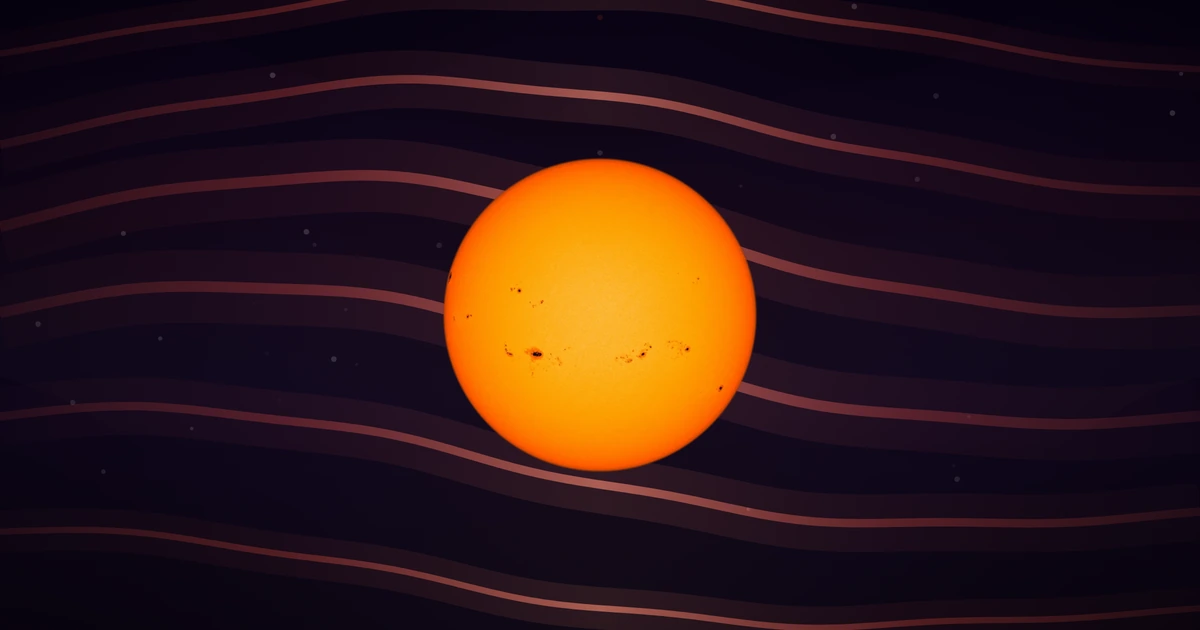
Where does the Sun frequency, 126.22 Hz, come from?
It comes from a thought experiment by Hans Cousto, not from anything the Sun does. Every other tone in his cosmic octave raises a real cycle into hearing: the Earth's year, its day, a planet's orbit. Cousto's own text on the Sun tone, in German on Planetware, says it plainly: it is the only tone "bei dem nicht eine vorhandene astronomische Periode hoch oktaviert wird", the only one that does not raise an existing astronomical period.
Instead, his planetary tuning tables describe a limit: "An imaginary planet which would orbit the center of the sun in the distance of the gravitational length with approximate speed of light would do this in the second well 32 000 times. The 8th sub-octave has then the frequency of 126.22 Hz." He compares the tone to absolute zero in physics, a boundary rather than a measurement.
His full calculation, first published in Mainz in 1982 and revised in 2008, puts the imaginary planet 1,476.6246 metres from the centre, about 1.5 km, going round 32,312.52 times a second. That is ultrasound, far above hearing. Halved once, it becomes 16,156.26 Hz, which Cousto notes is already in the top range of human hearing. Halved eight times, it becomes 126.22 Hz.

How do you work out 126.22 Hz yourself?
Divide the speed of light by the distance round a circle the size of the Sun's gravitational radius, then halve the answer eight times. NASA's Jet Propulsion Laboratory publishes the two numbers you need. The Sun's gravitational parameter, its mass times the gravitational constant, is 1.32712440041 × 10²⁰ cubic metres per second squared, and light travels 299,792,458 metres a second.
- The gravitational radius is that parameter divided by the speed of light squared: 1,476.625 metres.
- A circle with that radius is 9,277.92 metres round: 2 × π × 1,476.625.
- Light goes round it 32,312.50 times a second: 299,792,458 divided by 9,277.92. That is 32,312.50 Hz.
- Each halving lowers a tone by one octave. Halve 32,312.50 Hz eight times, which is dividing it by 256, and you reach 126.22 Hz.
Cousto took a different road in 1982 and arrived at the same place. He used Gauss's gravitational constant, which measures distance in units of the Earth's distance from the Sun, and found 32,312.52 Hz. In a section he added in 2008, he worked instead from the gravitational constant and the Sun's mass as he had them and found 32,301 Hz, so 126.18 Hz eight octaves down, a gap he put down to the Sun's mass not being known exactly. The figure NASA publishes today is good to ten digits, as Norbert Böhm's reworking of the Sun tone points out, and it lands back on 126.22 Hz.
| Route | Original, in Hz | Halved into hearing, in Hz |
|---|---|---|
| Cousto, 1982: Gauss's constant and the Earth's distance from the Sun | 32,312.52 | 126.22, after 8 halvings |
| Cousto, 2008: the gravitational constant times the Sun's mass | 32,301 | 126.18, after 8 halvings |
| Today: the Sun's gravitational parameter from NASA | 32,312.50 | 126.22, after 8 halvings |
| Böhm, 2025: the horizon of a black hole of the Sun's mass, spinning at its limit | 16,156.25 | 126.22, after 7 halvings |
Is 126.22 Hz the sound of the Sun?
No. "Sound won't travel through space, of course," as the Stanford Solar Center puts it, and nothing from the Sun reaches us as sound. Nobody recorded the Sun tone. It is arithmetic played as a note, not a sound travelling from the Sun.
The Sun does ring, though. The National Solar Observatory's GONG project describes "millions of distinct, resonating, sound waves" inside it, seen in the Doppler shift of light from its surface, with periods "in a two-octave span centered on five minutes". Turbulence near the surface sets them going, "causing the Sun to ring like a bell". They were discovered in the 1960s, first reported by Leighton and colleagues in 1962.
A cycle every five minutes is far too slow to hear. To let people hear them, the scientists behind the Stanford Solar Center's recordings sped the waves up 42,000 times, which puts the five-minute ringing near 140 Hz. That happens to sit in the same low register as the Sun tone, but only because of the speed they chose. The two numbers come from different things: one from the Sun's real vibration, the other from its mass.
Why is the Sun tone not taken from the Sun's rotation?
Cousto took a limit instead, and the Sun's own turning would not give one clear tone anyway. The Sun is a ball of hot gas, and its equator turns faster than its poles. NASA's Sun fact sheet gives the rate at every latitude as a formula. Worked through, one turn takes about 25.05 days at the equator and 34.35 days at the poles, and NASA adopts 609.12 hours, about 25.38 days, as the period at 16 degrees.
Harmonance worked that rotation the way Cousto works a planet's day: raised 28 octaves, which multiplies its rate by 268,435,456. The equator would sound at 124.02 Hz, a low B, and the poles at 90.45 Hz. No latitude turns fast enough to reach 126.22 Hz; even the equator falls about 30 cents short, under a third of a semitone.

| Latitude | One turn | As a tone, 28 octaves up |
|---|---|---|
| 0°, the equator | 25.05 days | 124.02 Hz |
| 16°, NASA's adopted period | 25.38 days | 122.41 Hz |
| 30° | 26.30 days | 118.15 Hz |
| 45° | 28.09 days | 110.60 Hz |
| 60° | 30.65 days | 101.36 Hz |
| 75° | 33.22 days | 93.54 Hz |
| 90°, the poles | 34.35 days | 90.45 Hz |
What does the Sun tone have to do with black holes?
The imaginary orbit behind it runs at the Sun's gravitational radius, a distance at the heart of black hole physics. Cousto's calculation notes that light cannot leave a body squeezed inside its gravitational radius, which is why such bodies are called black holes. His imaginary planet circles at exactly that distance, at nearly the speed of light. The real Sun is nowhere near it: its radius, 695,700 km on NASA's fact sheet, is about 471,000 times larger.
Cousto's route uses Newton's physics, and Planetware says so beside the tone: "Seine Methode basiert jedoch auf der Newtonschen Approximation und vernachlässigt die Allgemeine Relativitätstheorie." His method leaves out general relativity. In 2025 Norbert Böhm reworked it with the Kerr metric, the description of spinning black holes in general relativity. In Böhm's figures, a black hole with the Sun's mass that does not spin has its horizon at 2,953.25 metres, twice Cousto's radius. One spinning at the theoretical limit, which physicists call extreme Kerr, has its horizon at 1,476.625 metres, Cousto's radius exactly, and that horizon turns 16,156.25 times a second.
That is one octave below Cousto's original figure. Halve 16,156.25 Hz seven times, and the Sun tone comes back: 126.22 Hz.
What note is 126.22 Hz?
A low note between B and C, closer to B. In standard tuning, with A at 440 Hz, the nearest note is B2, the B just over an octave below middle C, at 123.47 Hz, and 126.22 Hz sits 38.1 cents above it, a little over a third of a semitone. Cousto names it B, which puts its A at 449.80 Hz rather than 440 Hz. Named C, it would need an A of 424.55 Hz, 61.9 cents below 440 Hz. As Planetware puts it, the name of a note always depends on the concert pitch you choose.
One cycle lasts 7.92 milliseconds. By the same octave method, his tables give the Sun tone a tempo of 118.33 beats a minute and a colour: yellow green light, at a wavelength of 540 nanometres. Its lower octave is 63.11 Hz and the octave above it 252.44 Hz.
What is the Sun tone used for?
In Cousto's tradition, for meditation and for tuning. His text gives the tone to the body's centre, because the Sun is the centre of the solar system: "Die Sonne ist die Mitte unseres Sonnensystems. Darum wird der Sonnenton auch der körperlichen Mitte zugeordnet." He links it with Manipura, the solar plexus in the chakra system. He calls it the tone of the twentieth century, standing for quantum physics and relativity rather than the classical physics of the other tones, and advises working with the other tones first. Planetware lists tuning forks tuned to it.
These are a tradition's meanings, and no study has tested them. The guide to astrology and frequencies follows the Sun's symbolism into the zodiac.
Harmonance's own 126.22 Hz video is one of the most played on its YouTube channel. The most liked comment under it reads:
We are children of the light.
One comment is one person's words, not a finding. Everyone hears the tone in their own way.
What does research say about the Sun tone?
Nothing yet: no study has tested 126.22 Hz, or any tone of the cosmic octave. The nearest evidence is about music in general. NCCIH, the United States' centre for complementary and integrative health, describes a 2020 review of 104 studies with 9,617 participants. It looked at music-based interventions and at measures associated with stress, some taken from the body and some from how people said they felt. The music had a small to medium beneficial effect on the body's measures and a medium to large one on how people said they felt.
Those studies used music, often chosen or led by a therapist, not one steady tone, so they say nothing about 126.22 Hz itself. NCCIH adds that "because much of the research on music-based interventions is preliminary, few definite conclusions about their effects have been reached".
So the Sun tone rests on its arithmetic and its tradition, not on research. If you listen, notice what you notice, and take any feeling as your own response rather than a measured effect.
What does the 126.22 Hz page actually play?
Two different sounds, which Harmonance measured from the audio files the page plays. Pure tone mode is 126.22 Hz with two faint overtones, at 252.44 Hz and 378.66 Hz, about 24 and 35 decibels quieter than the tone, so what you hear is one steady pitch.
Strings mode is slow string chords in a key whose home note is the Sun tone, with the exact 126.22 Hz tone very quiet underneath. Across the strings' three-minute loop, the loudest notes are not 126.22 Hz itself but the notes a third, a fifth and a sixth above it, near 159, 189 and 213 Hz. Pure tone mode is the Sun tone on its own; Strings mode is music written around it.
How do you listen to the Sun tone?
Press play at a low volume and let it run for a few minutes. Pure tone mode is one steady pitch, so any speakers or headphones will do, unlike binaural beats, which need a different tone in each ear. Small phone speakers play a tone this low quietly, so headphones or larger speakers carry it best.
To hum along, find the low B in your voice; a higher voice can hum the octave above, 252.44 Hz, and stay in tune with it. Let each out-breath run long, and stop whenever you like. The guide to using your voice goes further into humming and toning.
The 126.22 Hz Sun page plays the tone for as long as you leave it running. Harmonance Studio lets you layer it with other tones, such as the Earth's day, 194.18 Hz, or the Earth's year, 136.10 Hz, which Cousto called Om and the Om frequency guide explores. The low energy page gathers the Sun tone with two other planetary tones people reach for, and the planetary collection holds every tone in the family. The guide to planetary frequencies sets out the whole cosmic octave.
Sources and limits
The arithmetic comes from NASA's figures and Cousto's own papers, and the black hole physics from Böhm's reworking. The comparison with the Sun's rotation is Harmonance's own, worked from NASA's rotation rates, and so are the measurements of what the page plays, made from its own audio files. No study has tested the Sun tone, and the research on music in general says nothing about it.
- Hans Cousto, tuning data for the planets: the imaginary orbit, 32,312.52 Hz and its eighth octave down, the note, tempo and colour.
- Hans Cousto, the Sun tone (in German): the only tone not raised from a real period, its place at the body's centre, and Planetware's notes on Newton's physics and on the note's name.
- Hans Cousto, the calculation of the Sun tone (in German, 1982, revised 2008): the full working, the two routes and the link with black holes.
- Norbert Böhm (2025), the Sun tone and the Kerr metric (in German): today's figures and the spinning black hole.
- NASA JPL, astrodynamic parameters: the Sun's gravitational parameter and the speed of light.
- NASA, Sun fact sheet: the rotation at each latitude and the Sun's radius.
- National Solar Observatory, GONG: helioseismology: the Sun's own sound waves.
- Stanford Solar Center, Hear the Sun Sing: why no sound crosses space, and the 42,000 times speed-up.
- NCCIH, Music and health: what research on music does and does not show.
- A listener's comment under Harmonance's 126.22 Hz Sun video, quoted without the name.
Tones to play while you read
Related guides
210.42 Hz benefits: what the Moon tone is, and what is known
210.42 Hz benefits are symbolic: the Moon tone is the 29.53-day lunar month raised 29 octaves, and no study has tested it. Where the claims come from.
432 Hz benefits, chakras and the evidence
432 Hz benefits and chakra claims weighed: the tuning history, the chakra framework, and what studies of 432 Hz music have and have not found.
888 Hz meaning: the angel number, its history and its sound
888 Hz meaning comes from the number: angel books read eight as plenty, Chinese tradition counts it lucky, and in Greek the name Jesus adds up to 888.
Just be curious. This is not a medical device or medical advice. For any health concern, please speak to your doctor.