Guide
Plain-language context
Epsilon is a term used for extremely slow brain activity, below the half-cycle-per-second mark, sometimes discussed alongside very deep meditation and rest. It is a niche and loosely defined idea. This guide introduces the term carefully and is honest about how little is firmly established.
What the term means
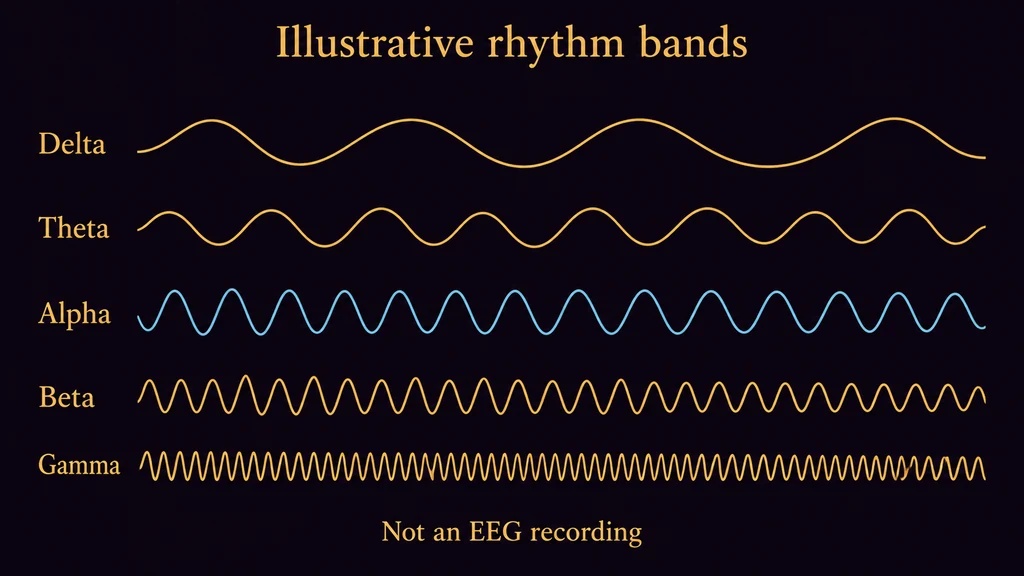
Standard brainwave bands run from the faster beta and gamma down through alpha, theta and delta. Epsilon is sometimes proposed as an even slower band below delta. The label appears more often in meditation discussion and sound-work marketing than in mainstream neuroscience, and definitions vary between sources. It is best held as an evocative idea rather than a settled scientific category. For the better-established bands, see theta waves.
How the idea is used in sound work
Some very slow soundscapes and low-frequency drones are described as supporting epsilon-style states of profound stillness. In practice, listeners use these tracks as a backdrop for long, quiet meditation or deep rest, and the slow, spacious character of the music is a large part of the appeal.
It helps to understand why these tracks can feel so different from ordinary music. Very low, sustained tones carry little melodic movement to follow, so there is less for the mind to track and more room to simply settle. Some recordings layer barely perceptible low frequencies under a soft ambient bed, while others lean on the long ring of bowls or gongs. The effect many listeners describe is less a particular brain state and more a sense of the room growing quiet around them. That is a perfectly good reason to enjoy the music, and it does not depend on accepting the epsilon label at all.
- Use very slow tracks as a backdrop for a long, settled meditation.
- Keep the volume low so the low frequencies sit gently underneath attention.
- Let the session unfold without expecting a particular state to arrive.
What the evidence says
Firm evidence specific to an epsilon band is scarce, and the term itself is not standardised, so confident claims about reaching a unique state are not supported. What can be said honestly is that slow, spacious sound is a context many people find deeply restful. Hold the terminology lightly and let your own experience lead.
Listen with this
If this piece speaks to you, you might explore these tones gently as part of a wind-down or focus routine: 7.83 Hz Schumann binaural 174 Hz 432 Hz.
Sources
NCCIH’s overview concerns music-based interventions. Our inference is that this evidence does not establish a clinical benefit from one isolated listening tone. Personal enjoyment is a listening response, not a clinical measurement. Read the music research and its limits.
- NCCIH: Music and Health, What You Need To Know
- Meditation and slow brain activity studies (PubMed)
- Meditation and relaxation reviews (Cochrane Library)
Safety note: Harmonance is for relaxation, reflection, and educational exploration. It is not health advice or a replacement for professional care.
What does epsilon mean in brainwave and binaural-beat descriptions?
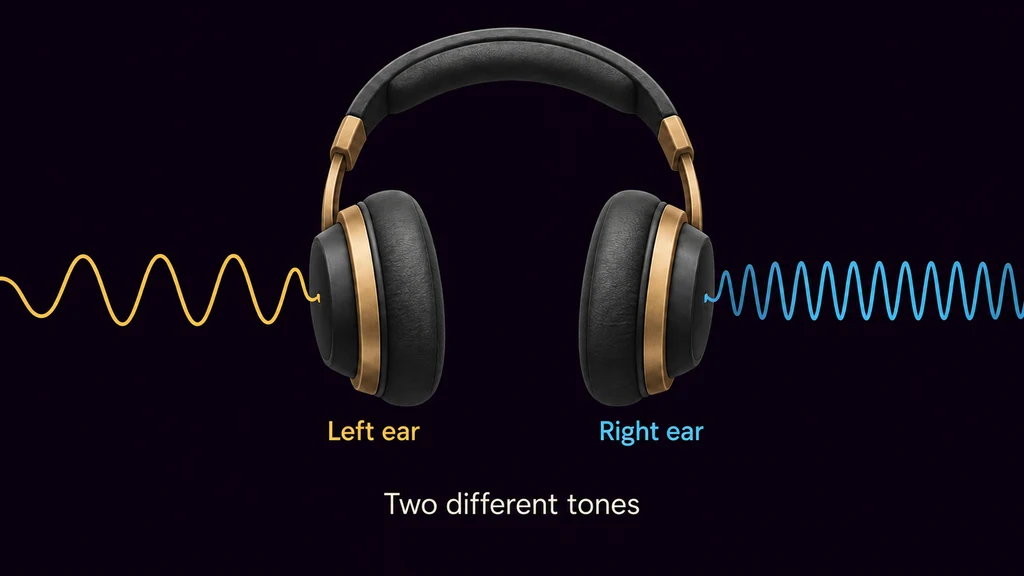
The guide describes epsilon as a loosely defined label, not a standardised listening result. A very slow beat is an audio pattern, and it does not establish an EEG state. Hold the term as context rather than a target to reach.
Listen without turning context into a promise
The related tone buttons below are audible listening examples. Press Play deliberately, begin quietly and pause when you want. A traditional name, simulation or whole-music study is not proof of a clinical effect from the displayed pitch.