Guide
Plain-language context
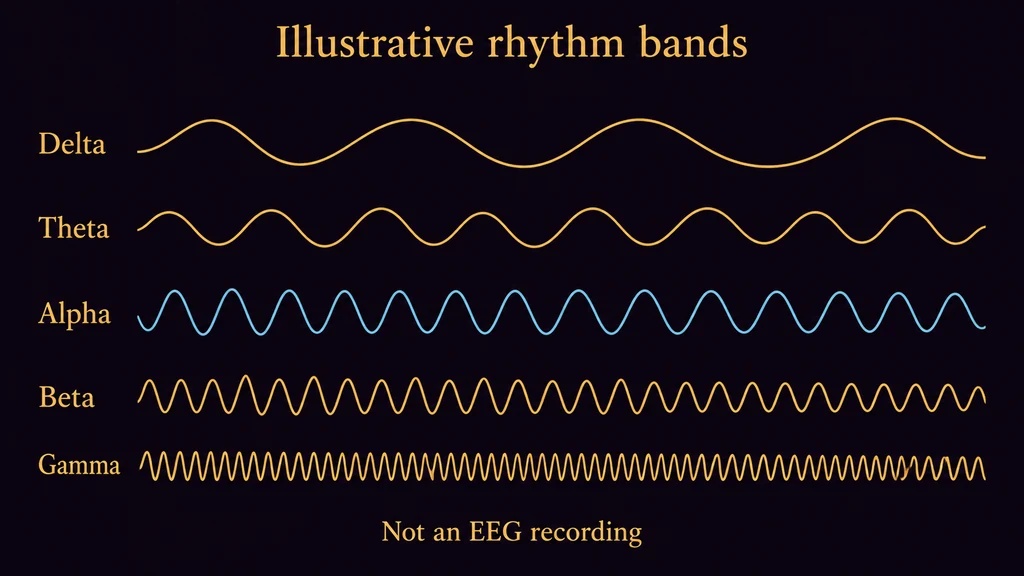
Theta is the name given to a slow band of brain activity, roughly four to eight cycles per second, often associated with drifting, dreamy states between waking and sleep. In sound work, theta-range binaural beats are offered as a backdrop for deep relaxation and meditation. This guide explains the terms plainly and why individual experiences vary so widely.
What theta and binaural beats mean
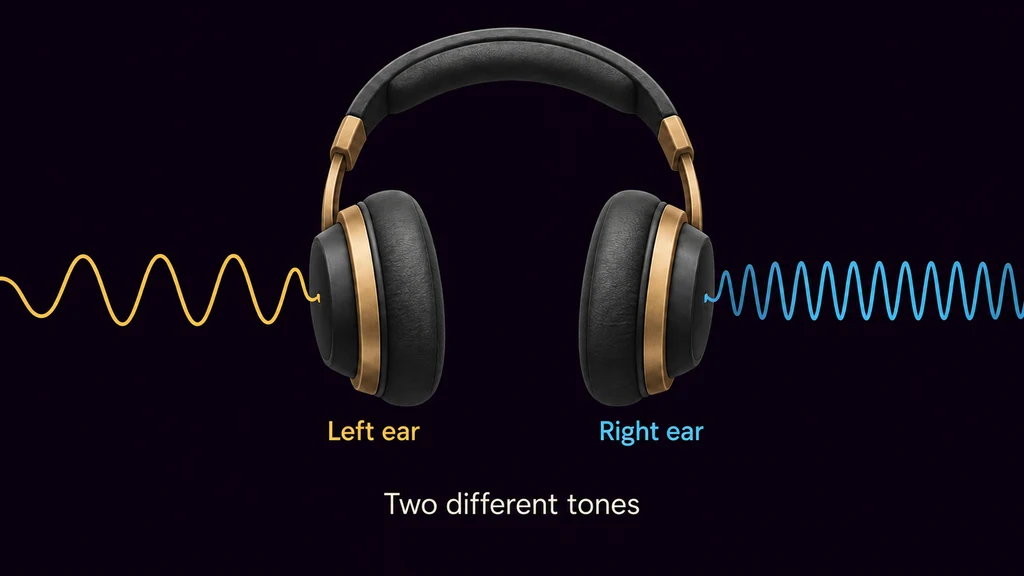
Brainwave bands are simply rough labels for the rhythms electrodes pick up at different states of alertness. A binaural beat is created when each ear receives a slightly different tone; the brain perceives a third, slower beat at the difference between them. A theta-range beat aims for a difference of a few cycles per second. For the wider technique, see binaural beats versus isochronic tones, and for a contrasting band see beta waves and binaural beats.
Why experiences vary
Whether a listener feels anything distinctive depends on the headphones, the volume, the underlying music, the time of day and their own state. The idea that the brain falls neatly into step with an external rhythm, sometimes called entrainment, is discussed far more confidently in marketing than in the cautious research literature. Many people enjoy theta tracks for the slow, dreamy mood of the music itself as much as for any beat.
How listeners use it
- As a backdrop for an evening wind-down or a longer meditation.
- Through headphones at a low, conversational volume, since the beat depends on each ear hearing a slightly different tone.
- For short sessions at first, noticing the response before extending.
What the evidence says
Reviews of binaural-beat research report early, mixed results for relaxation and attention, with small studies and varied designs that make firm conclusions difficult. Hold dramatic promises about reaching a specific mental state on demand with caution, and let your own experience over several sessions be the better guide.
Listen with this
If this piece speaks to you, you might explore these tones gently as part of a wind-down or focus routine: 432 Hz 7.83 Hz Schumann binaural 174 Hz.
Sources
NCCIH’s overview concerns music-based interventions. Our inference is that this evidence does not establish a clinical benefit from one isolated listening tone. Personal enjoyment is a listening response, not a clinical measurement. Read the music research and its limits.
- NCCIH: Music and Health, What You Need To Know
- Binaural beats and theta studies (PubMed)
- Auditory beat stimulation reviews (Cochrane Library)
Safety note: Harmonance is for relaxation, reflection, and educational exploration. It is not health advice or a replacement for professional care.
What are theta waves, and how do they differ from theta-themed audio?
Theta is an EEG band. A theta-labelled recording may use a slow beat as listening context, but the label does not measure brain activity or prove a fixed result. The guide separates the electrical rhythm from the sound technique.
Listen without turning context into a promise
The related tone buttons below are audible listening examples. Press Play deliberately, begin quietly and pause when you want. A traditional name, simulation or whole-music study is not proof of a clinical effect from the displayed pitch.