Guide
Plain-language context
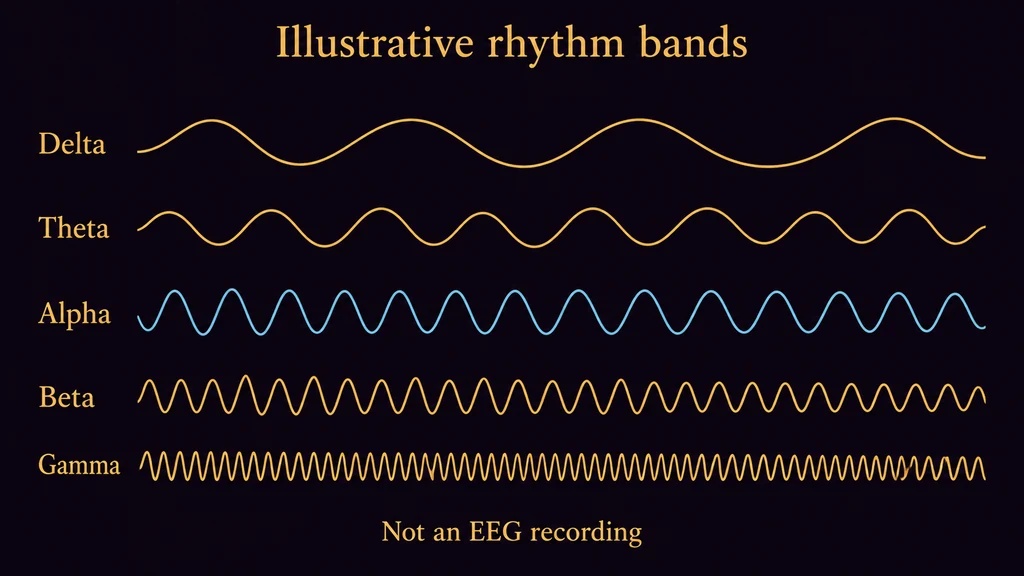
Alpha waves are one of the named bands of electrical rhythm that researchers record from the scalp, sitting roughly between 8 and 12 cycles per second. They tend to show up when a person is relaxed but awake, eyes closed, settled, not straining at a task. Binaural beats are an audio technique often discussed alongside them. This guide explains both in plain language and keeps the claims modest.
What the terms mean
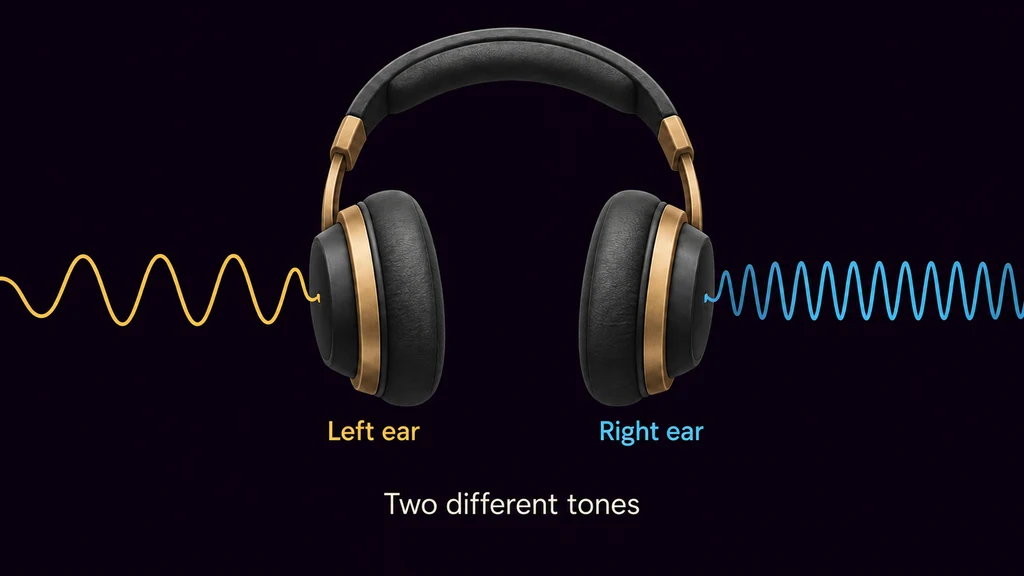
A binaural beat is an auditory illusion. Play a steady tone of one pitch into the left ear and a slightly different pitch into the right, and the brain perceives a third, slower pulsing "beat" at the difference between them. To target an alpha-style 10 Hz beat, for example, you might use 200 Hz in one ear and 210 Hz in the other. The effect needs headphones, because it depends on each ear hearing only its own tone.
The popular theory of "entrainment" suggests the brain's rhythms might fall into step with that beat. It is a reasonable hypothesis, but it is not a settled fact, and the size of any such effect is debated.
How listeners use it
- As a quiet backdrop for meditation or a wind-down before sleep.
- As a gentle focus aid during reading or repetitive work.
- As a cue to slow the breath and settle attention on the present moment.
If you want to go deeper into the mechanics, our piece on binaural beats and brainwaves covers the evidence in more detail.
What the evidence says
Reviews of binaural beats report early and mixed results. Some studies find small effects on relaxation, focus, or mood; others find little. Sample sizes are often small and methods vary, so findings are preliminary and context-specific. Read any shift you notice as a personal response shaped by the music, the room, and your own state, not a fixed outcome.
Where the brainwave bands come from
The named bands, alpha, beta, theta, delta, gamma, come from electroencephalography, the recording of tiny electrical voltages at the scalp that began in earnest in the 1920s with Hans Berger. Berger noticed a steady rhythm of around ten cycles a second when his subjects closed their eyes and relaxed, and that "alpha rhythm" became the first of the bands. The labels are genuine, descriptive neuroscience. What they are not is a set of dials you can turn at will with sound; the bands describe states, and states arise from many things at once, of which audio is only a small possible nudge.
Holding expectations lightly
The most reliable route to alpha-style ease is not a clever audio trick but the ordinary business of relaxing: a comfortable seat, eyes softened or closed, and a few unhurried breaths. If a binaural track helps you arrive there, it is doing its job as a cue. If it distracts, the breath alone will serve you just as well.
Listening notes
Binaural beats need headphones to work, since each ear must hear only its own tone. Keep the volume gentle and the session short, and choose a slower beat for wind-down or a slightly faster one for daytime focus. The most important thing is to let the audio be a cue rather than a chore: if it helps you settle into a relaxed, present state, it is doing its job; if it pulls at your attention, the breath alone will get you there. Stop whenever it stops feeling pleasant.
Listen with this
If this piece sparked your curiosity, a few tones sit naturally alongside it: 7.83 Hz Schumann binaural, 432 Hz, 174 Hz. Try one softly, in a quiet moment, and notice what shifts for you. There is no need to listen to all of them, and no right order to explore them in; the most rewarding tone is usually the one whose character or story you find yourself returning to.
Sources
Systematic reviews of binaural beats report cautious, preliminary findings. The honest picture is that the evidence is early and mixed, and findings are preliminary and context-specific rather than settled. The cited music overview concerns music-based interventions. That context does not establish a result for one isolated pitch. We share these links so you can read the primary sources and form your own view rather than take any claim, including ours, on trust.
- PubMed, A systematic review on the role of binaural beats (2018)
- NCCIH, Music and health: what you need to know
Listening safely
Whatever you explore here, a few simple habits keep the practice gentle and comfortable. Choose a volume you could easily talk over, give yourself a short, unhurried session rather than a marathon, and sit or lie in a supported, comfortable posture so the body can settle. Let attention rest lightly on the breath or the sound, and step away the moment anything feels grating or unpleasant rather than pushing through. Above all, approach it with curiosity and patience: notice what genuinely settles you, keep that, and let the rest go. This is an educational listening practice, not medical advice or a replacement for professional care.
What are alpha brainwaves, and how do they differ from a binaural beat?
Alpha is a band of electrical activity recorded with EEG. A binaural beat is an auditory difference between two tones sent separately to the ears. The shared Hz unit does not make the sound a measurement of brain activity. Read the definitions and evidence discussion above.
Listen without turning context into a promise
The related tone buttons below are audible listening examples. Press Play deliberately, begin quietly and pause when you want. A traditional name, simulation or whole-music study is not proof of a clinical effect from the displayed pitch.