Guide
Plain-language context
A sound bath is a group or private listening session in which participants rest comfortably while a practitioner plays a sustained, slow soundscape on a small collection of resonant instruments. The result is more like an extended ambient concert held in a quiet room than a performance you sit upright for. For many people the practice has become an accessible way to spend an hour slowing down, listening attentively, and giving the nervous system a moment that does not ask anything of it. This article walks through what a sound bath actually is, the traditions the modern practice draws on, what to expect when you attend, how to choose a session that suits you, what research can and cannot say honestly, and the simple care considerations to keep in mind before you book.
What a sound bath actually is
The format is straightforward. You arrive at a studio, hall, or quieter wellness space. The room is usually softly lit, sometimes with mats, blankets, eye pillows, and bolsters laid out in advance. You settle on the floor, on a mat, or on a chair if lying down does not suit you. The practitioner introduces the session, gives a few simple breath cues, and begins a slow sequence of sustained tones on instruments built to carry long, layered sound.
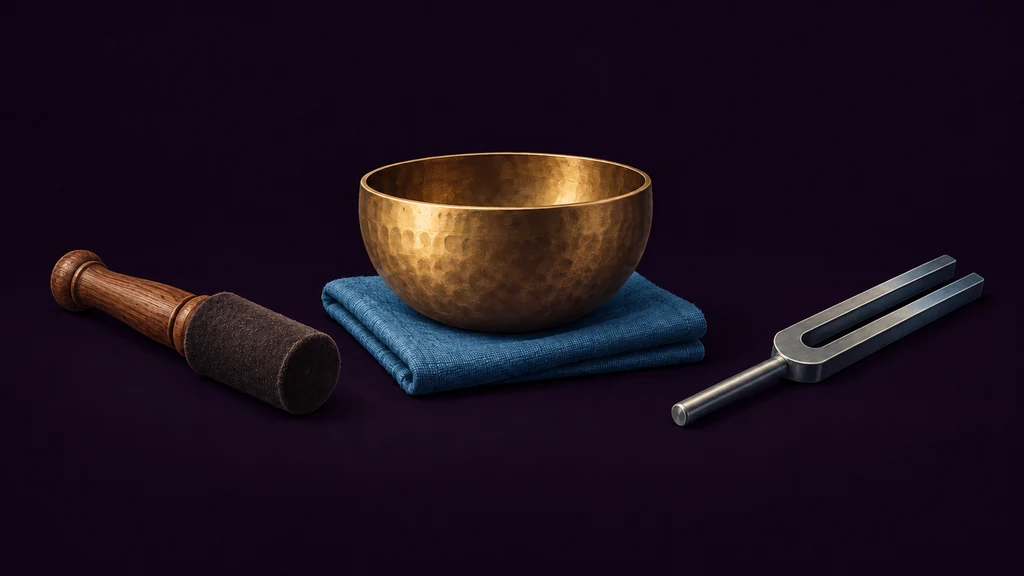
The instruments vary by practitioner but typically include singing bowls made from metal alloys, singing bowls made from quartz crystal, gongs of various sizes, hand chimes, small percussion such as ocean drums or shakers, and sometimes voice. Many practitioners weave in tuning forks placed near the body or simply rung in the air. The overall sound is not melodic in the pop sense. It is layered, slow, and rich in overtones, the kind of audio that fills a room and then settles into the background of your attention.
Sessions usually run between forty and ninety minutes. A typical hour begins with a brief introduction and breath settling, moves into a long body of sustained playing during which participants simply rest and listen, and finishes with a quiet return as the sound fades. The practitioner closes with a short reflection or a moment of silence before guests slowly sit up.
The traditions the modern practice draws on
Modern sound baths are a contemporary blend that draws loosely on several older threads rather than a single recovered lineage. Tibetan and Himalayan bowl traditions contribute the long sustained tones of metal singing bowls. Crystal bowls themselves are a more recent twentieth-century innovation rooted in industrial quartz manufacturing. Indian classical music, with its drone-led approach to sustained pitch, sits in the background of much modern ambient work. Sufi listening practices, Indigenous Australian use of the didgeridoo over many thousands of years, gong work that travelled west from Asia in the twentieth century, and Western ambient and minimalist composition all colour what you hear in a studio session today.
It is honest to say that a sound bath as we encounter it now is a modern wellness format. It borrows respectfully from older traditions, often through the work of practitioners who have studied in those lineages, but the hour-long studio format itself is new. The sound is meaningful in its own right, and the wider story is best told as a thoughtful contemporary synthesis rather than as an unbroken ancient lineage.
What to expect when you attend
If you have not been to a sound bath before, a small amount of preparation helps. Wear comfortable clothes you can lie down in. Bring a layer for warmth, since body temperature tends to drop a little when you are still for an hour. If the studio supplies mats and blankets, you can usually leave belongings in a labelled cubby; if not, plan to bring your own roll mat, a small cushion, and a blanket.
- Arrive ten minutes early so you have time to settle without rushing.
- Use the bathroom before the session; the room is usually quiet once playing starts.
- Choose a spot that feels comfortable, not too close to the largest gong if loud tones bother you.
- Tell the practitioner anything you would like them to know.
- Keep your phone away for the full hour.
- Plan for a slow exit afterwards rather than an immediate rush back to other commitments.
During the session the sound rises and falls across the room. Some moments are very quiet, others fuller and richer. You might notice your breath slowing on its own. Your mind may wander, drift, or briefly drop into something that feels like a half-sleep. All of those responses are normal, and there is nothing in particular you are supposed to do. Listening, however you listen, is the practice.
How to choose a session that suits you
Sessions vary a great deal depending on the practitioner, the instruments, and the room. A short checklist can help you find one that matches what you are looking for.
- Read the studio description carefully. Some sessions are gentle and ambient; others use larger gongs and louder peaks.
- Look for a practitioner whose background and training feel transparent and credible.
- If you are sensitive to loud sound, choose a smaller room and a session that emphasises bowls over big gongs.
- Ask whether chairs are available if lying on the floor does not suit you.
- Read recent participant reviews and notice whether reviewers describe a calm, well-held space.
- Trust your instincts; if a studio's online presence feels overpromising, a calmer venue will serve you better.
Group sessions are usually cheaper and shaped by the sound of many people resting in one room. Private sessions are quieter and bespoke, and let you talk through your own context with the practitioner first. Many people alternate between the two as their practice develops.
What research can and cannot honestly say
Interest in the effects of sound on attention and rest has grown over recent decades, and a small body of research has looked at sound baths and similar practices specifically. The honest summary is that the available studies are typically small, short, and limited in design. They tend to find that participants report feeling more relaxed and slightly lighter in mood after a session, in line with what people say about other slow, restful, screen-free activities. Some studies measure modest changes in heart rate variability or self-reported tension, but those findings do not yet build a strong case that sound baths produce unique effects beyond those of other restorative practices.
What can be said carefully is that an hour spent quietly resting in a softly lit room while listening to slow, sustained sound is a context that many people find calming. Whether the calmness comes specifically from the instruments, from the stillness, from the room, or from the simple decision to give yourself a slow hour is still being teased apart by researchers. Holding the practice as a pleasant, restful context rather than as a proven physical mechanism is the most honest framing.
Care considerations and when to check in with a clinician first
Sound baths are usually well tolerated, but a small number of situations benefit from a quick conversation with a qualified clinician before booking. The studio itself will often have a similar list and may ask you to mention any of these on a sign-up form.
- If you are pregnant, mention this when booking; many practitioners offer adjusted sessions and will avoid placing certain instruments near the body.
- If you have a current health condition that affects your ears or head, check with your clinician first and tell the practitioner.
- If you have a history of seizures or sensitivity to strong sensory input, choose a gentler session and let the studio know.
- If you wear hearing aids or are very sensitive to loud peaks, ask about volume and consider sitting further from the gongs.
- If you have recently been through a hard moment emotionally, choose a low-key session and tell someone you trust where you will be that hour.
None of these notes are meant to discourage you from attending. They are simple, sensible adjustments that make the practice work better for the person you are right now. A practitioner running an honest studio will welcome these conversations rather than brush them off.
A closing reflection
A sound bath is, at its plainest, an unusually intentional hour of listening. The instruments are beautiful, the format is supportive, and the room is quieter than most rooms we sit in over the rest of a busy week. For many people that combination is reason enough to come back. The wider claims sometimes attached to the practice are best held lightly; the simple description, an hour of slow attentive listening in a calm room, captures most of what is on offer.
If you have been curious about sound baths, the most useful step is to try one with realistic expectations and a small amount of preparation. Notice what changes in your day after the session, how rested you feel later that evening, and whether the calm you found in the room travels with you for a few hours afterwards. Let your own response guide whether the practice becomes a regular part of your routine.
For related reading, see what is sound healing and the history of sound healing.
Listen with this
If this piece speaks to you, you might explore these tones gently as part of a wind-down or focus routine: 174 Hz 432 Hz 528 Hz.
Sources
NCCIH’s overview concerns music-based interventions. Our inference is that this evidence does not establish a clinical benefit from one isolated listening tone. Personal enjoyment is a listening response, not a clinical measurement. Read the music research and its limits.
- NCCIH: Music and Health, What You Need To Know
- Sound bath and meditation studies (PubMed)
- Relaxation and music interventions (Cochrane Library)
Listen without turning context into a promise
The related tone buttons below are audible listening examples. Press Play deliberately, begin quietly and pause when you want. A traditional name, simulation or whole-music study is not proof of a clinical effect from the displayed pitch.