Frequency guide
Listening context
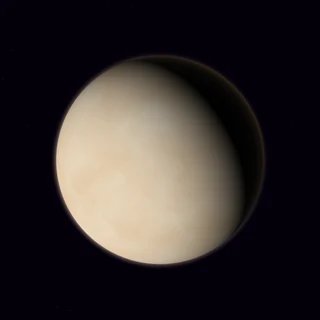
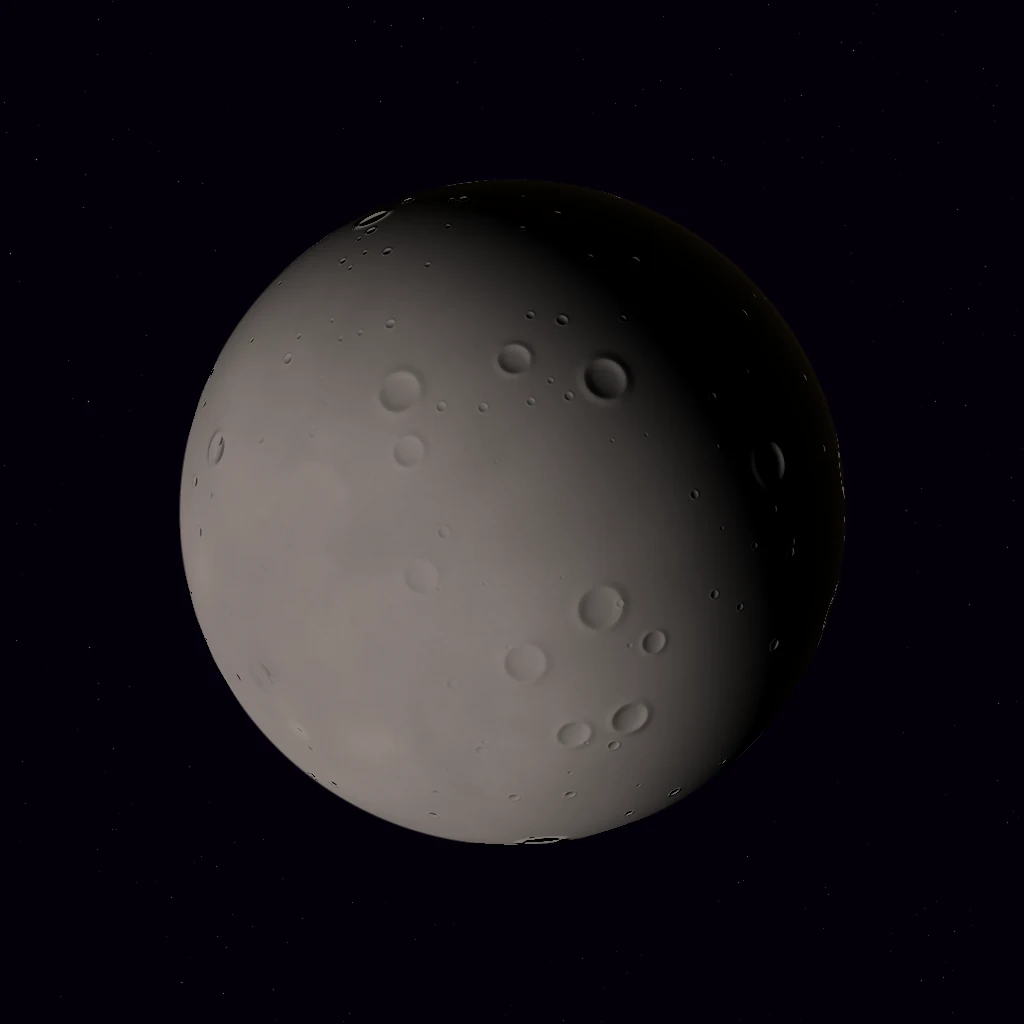
141.27 Hz is the tone that Hans Cousto's cosmic-octave system assigns to Mercury, the small, swift planet closest to the Sun. The pitch sits close to a C-sharp in standard tuning and has a bright, quick character that feels alert without being sharp.
Origin: the astronomy and the octave maths
Cousto's approach turns a real orbital period into an audible pitch by doubling its frequency through successive octaves. Each doubling raises the pitch by one octave; enough doublings lift even a months-long cycle into the hearing range.
Mercury is the fastest planet in the solar system, racing around the Sun once every 87.97 days at an average speed of about 47 kilometres per second. Cousto read that short year as a very low frequency and doubled it through roughly thirty octaves, arriving at about 141.27 Hz. The brisk orbit shows up in the sound: among the planetary tones this one feels nimble rather than weighty. As ever, the figure is a translation of orbital motion into something we can hear, not a sound emitted by the planet, since audible waves cannot cross the near-vacuum of space.
Tradition and mythology
Mercury has carried the same bundle of meanings for a very long time. In Roman myth Mercury was the fleet-footed messenger of the gods, patron of language, trade, travellers, and quick wits; his Greek counterpart did the same work. In Vedic astrology Budha governs intellect, speech, and learning. Western astrology ties the planet to communication, reasoning, and the ability to translate one idea into another. The fast little world became, fittingly, the planet of the mind in motion.
Mercury's speed is not the only thing that marks it out. It is the smallest planet in the solar system, barely larger than our own Moon, and it has almost no atmosphere to hold heat, so its surface swings from scorching day to frigid night more sharply than anywhere else among the planets. Because it sits so close to the Sun, it never strays far from it in our sky, appearing only briefly low to the horizon at dawn or dusk. The ancient Greeks, seeing it both before sunrise and after sunset, at first took it for two different objects, Apollo in the morning and Stilbon in the evening, before realising they were watching a single restless world. That darting, hard-to-pin-down quality fits the messenger symbolism the planet has always carried.
How listeners use it
- A clear, slightly forward quality that draws attention to the page or screen.
- An easier time finding the next sentence when writing or drafting a message.
- A warm-up before a difficult conversation or a rehearsal.
- A daytime tone rather than a wind-down sound for evening rest.
What the evidence says
The notion that a Mercury-derived tone sharpens communication is traditional and experiential, not established science; no solid research supports it, and real fluency comes from reading widely, writing often, and listening carefully. Broader work on sound and attention is early and mixed: some studies find background tones can help concentration for some people, others find the opposite, and results are preliminary and context-specific. Use the tone as a small, repeatable cue, not a promised outcome.
How to listen
- Try a short session of five to fifteen minutes before writing or speaking work.
- Keep the volume low and conversational; you should be able to talk over it.
- Pair it with one idea you want to articulate more clearly today.
- Use a speaker or open-back headphones for a roomier feel.
- Switch it off if the brightness starts to feel buzzy rather than helpful.
141.27 Hz Mercury: Communication And Listening Context
For direct playback, use the related frequency page: 141.27 Hz: Mercury.
141.27 Hz Mercury: communication and listening context
The Mercury tone is part of Hans Cousto's cosmic-octave system, in which the reciprocal of a real orbital period is doubled through octaves until it becomes audible. Mercury races around the Sun once every 87.97 days, the fastest orbit in the solar system, and that briskness shows up in the sound: among the planetary tones this one feels nimble and bright rather than weighty.
Where the symbolism comes from
Mercury has carried the same cluster of meanings for a very long time. In Roman myth Mercury was the fleet-footed messenger of the gods, patron of language, trade, and quick wits; in Vedic astrology Budha governs intellect and speech. Western astrology ties the planet to communication and reasoning. The fast little world became, fittingly, the planet of the mind in motion.
As with every cosmic-octave tone, the figure is a translation of orbital motion into something we can hear, not a sound the planet emits, since audible waves cannot cross the near-vacuum of space. The communication symbolism is a frame for attention, not a property of the audio.
How listeners use it
- A clear, slightly forward quality that draws attention to the page or screen.
- A warm-up before drafting a message, a difficult conversation, or a rehearsal.
- A daytime tone rather than a wind-down sound for evening rest.
Many people use it as a small, repeatable cue at the start of focused work. Real fluency still comes from reading widely, writing often, and listening carefully, the tone is one quiet companion to that, not a shortcut. For more on attention and listening, see our overview of binaural beats and brain waves.
How to listen
- Try a short session of five to fifteen minutes before writing or speaking work.
- Keep the volume low and conversational; you should be able to talk over it.
- Pair it with one idea you want to articulate more clearly today.
- Switch it off if the brightness starts to feel buzzy rather than helpful.
Listen with this
If this tone suits you, these neighbouring references give you something to compare it with.
Sources
NCCIH’s overview concerns music-based interventions. Our inference is that this evidence does not establish a clinical benefit from one isolated listening tone. Personal enjoyment is a listening response, not a clinical measurement. Read the music research and its limits.
Harmonance is for relaxation, reflection, and educational exploration. It is not medical advice and should not replace professional care.
What is 141.27 Hz?
141.27 Hz means 141.27 cycles per second. Cousto doubles Mercury's 87.97-day orbit through octaves into this tone; Mercury was the messenger Mercurius, planet of language, trade, and quick thinking, and the Vedic Budha of intellect and speech.
Try the pitch, then notice
Press Play above when you are ready. Start quietly, listen briefly, and use the player’s volume control. Compare the neighbouring tones without judging one as medically superior. Stop if the sound is uncomfortable. Signed-in Studio lets you choose layers and timers; public listening needs no account.