Frequency guide
Listening context
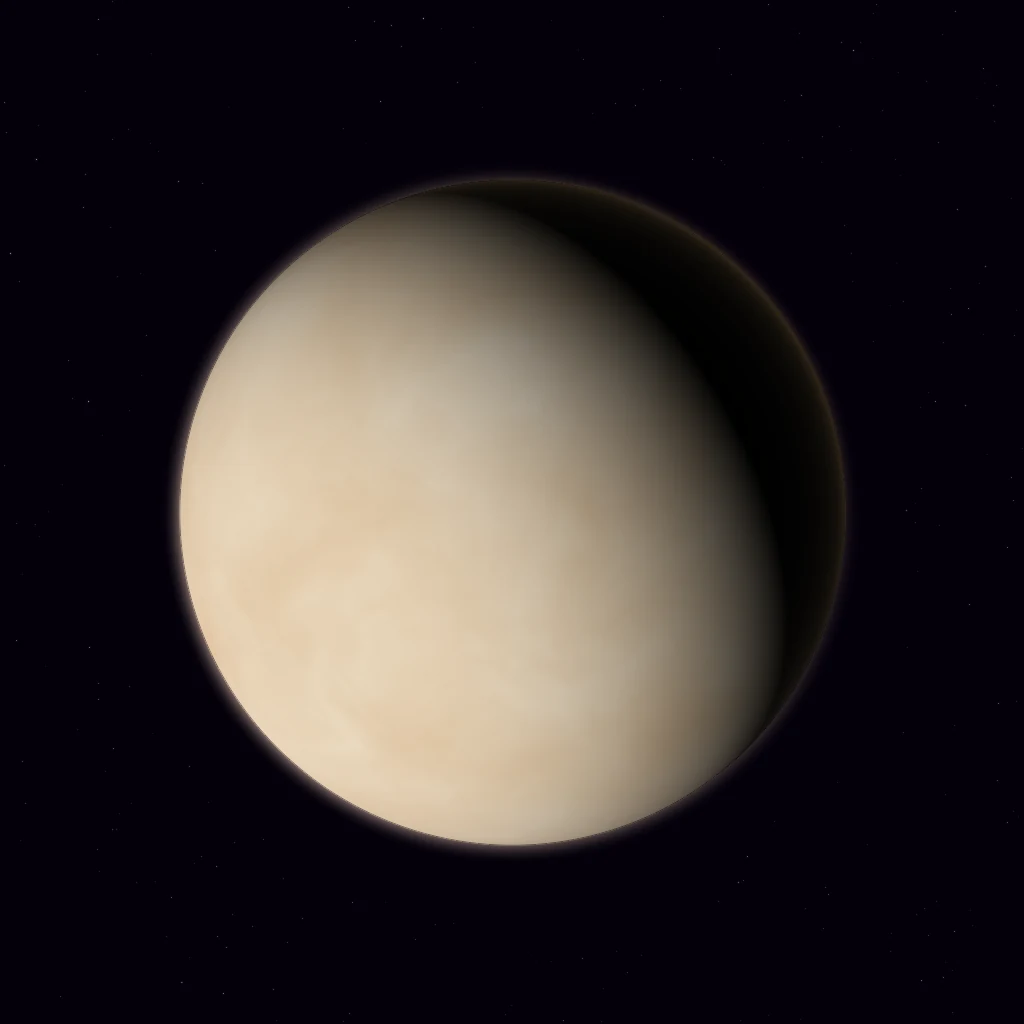
221.23 Hz is the tone that Hans Cousto's cosmic-octave system assigns to Venus, the second planet from the Sun and the brightest natural object in our night sky after the Moon. The pitch sits near an A in standard tuning, with a warm, slightly rounded character that listeners often describe as soft rather than insistent.
Origin: the astronomy and the octave maths
Cousto's method takes a real orbital period and doubles its frequency through octaves until it becomes audible. A single octave is exactly a doubling of frequency, so a cycle lasting many days can be raised, intact in its proportions, into the range of hearing by repeating that step.
Venus circles the Sun once every 224.7 days. (Curiously, the planet spins so slowly and backwards that a single Venusian day is even longer than its year, but the cosmic-octave tone is built from the orbit.) Reading the 224.7-day year as a very low frequency and doubling it through thirty-two octaves yields about 221.23 Hz. The tone is a translation of that orbital rhythm into sound, not a noise the planet makes; sound needs a medium, and the space between planets is essentially empty.
Tradition and mythology
Venus is named for the Roman goddess of love and beauty, whose Greek counterpart Aphrodite rose from the sea. In Vedic astrology the corresponding figure Shukra is linked with refinement, art, and the appreciation of fine things. Because Venus appears as both the radiant Morning Star and the Evening Star, ancient cultures from Mesopotamia onward gave it special attention. Western astrology names Venus the ruler of Taurus and Libra, signs associated with patient care, harmony, and considered beauty. Cousto's tone gathers that symbolism into a single warm reference pitch.
The astronomy behind Venus is genuinely strange and helps explain its hold on the imagination. It is the hottest planet in the solar system, hotter even than Mercury, wrapped in a thick atmosphere of carbon dioxide that traps heat under a permanent shroud of cloud. It also spins backwards compared with most planets, and so slowly that, as noted above, a single rotation outlasts its year. To the eye, none of this is visible: what we see is simply the most brilliant point of light in the sky after the Moon, bright enough to cast faint shadows on a dark night and to be glimpsed even in daylight if you know where to look. That dazzling beauty, hiding a fierce world beneath, is part of why Venus has drawn so much myth and attention.
How listeners use it
- A warm, rounded quality that feels companionable rather than busy.
- A backdrop for journaling about a relationship you would like to tend to.
- A prompt to slow down and notice what you appreciate in the room you are in.
- A friendly soundtrack for cooking, slow drawing, or a shared meal.
What the evidence says
NCCIH’s overview concerns music-based interventions. Our inference is that this evidence does not establish a clinical benefit from this isolated 221.23 Hz tone. Personal enjoyment is a listening response, not a clinical measurement. Read the music research and its limits.
How to listen
- Try a session of ten to twenty minutes as a soft bookend to the working day.
- Pair the tone with one small act of care you would like to make this week.
- Keep the volume low and pleasant; this is a tone for sitting underneath the moment.
- Use it under a slow meal, a quiet creative session, or a long letter.
- Step away if the softness starts to feel slack rather than restful.
221.23 Hz Venus: Harmony And Listening Context
For direct playback, use the related frequency page: 221.23 Hz: Venus.
221.23 Hz Venus: harmony and listening context
The Venus tone belongs to Hans Cousto's cosmic-octave system, which doubles the frequency calculated from a real orbital period through octaves until it becomes audible. Venus circles the Sun once every 224.7 days, and its tone is one of the warmer, more rounded references in the planetary family, which is why listeners often link it with ease and gentle harmony.
Where the symbolism comes from
Venus is named for the Roman goddess of love and beauty, Aphrodite to the Greeks; in astrology it rules Taurus and Libra and is tied to affection, harmony, and a sense of balance. As the brightest planet in our sky, often the first "star" to appear at dusk, Venus has drawn that symbolism for millennia. Western astrology associates it with relationships, beauty, and a settled, open-hearted frame of mind.
The figure is a translation of orbital motion into sound, not a sound the planet emits across the vacuum of space. Hold the harmony symbolism as a gentle prompt rather than a claim, any warmth you notice is your own response, shaped by the music and the moment.
How listeners use it
- A warm, rounded quality that suits a calm, open-hearted mood.
- A backdrop for reflection on relationships or self-kindness.
- A companion to gentle creative work or quiet time with others.
Many people use it as a soft prompt for a settled, generous frame of mind. Our guide to 639 Hz and connection offers a neighbouring theme worth comparing.
How to listen
- Try a session of ten to twenty minutes in a calm, comfortable space.
- Keep the volume low and conversational.
- Pair it with reflective writing about a relationship or a kindness you want to extend.
- Switch references if the warmth starts to feel flat rather than easeful.
Listen with this
If this tone suits you, these neighbouring references give you something to compare it with.
Sources
NCCIH’s overview concerns music-based interventions. Our inference is that this evidence does not establish a clinical benefit from one isolated listening tone. Personal enjoyment is a listening response, not a clinical measurement. Read the music research and its limits.
Harmonance is for relaxation, reflection, and educational exploration. It is not medical advice and should not replace professional care.
What benefits are claimed for 221.23 Hz?
The traditional associations described above are listening themes, not measured outcomes. NCCIH’s overview concerns music-based interventions. Our inference is that this evidence does not establish a clinical benefit from this isolated 221.23 Hz tone. Personal enjoyment is a listening response, not a clinical measurement. Read the music research and its limits.
What is 221.23 Hz?
221.23 Hz means 221.23 cycles per second. Cousto doubles Venus's 224.7-day orbit through octaves into this tone; Venus is the love goddess Aphrodite or Venus, and the Vedic Shukra of refinement and beauty, also famous as the Morning and Evening Star.
Try the pitch, then notice
Press Play above when you are ready. Start quietly, listen briefly, and use the player’s volume control. Compare the neighbouring tones without judging one as medically superior. Stop if the sound is uncomfortable. Signed-in Studio lets you choose layers and timers; public listening needs no account.