Guide
Plain-language context
Sound healing is a wide, loose term that covers a family of contemporary practices: listening to single tones, sitting with the long ring of a bowl or gong, slow voice work, drumming, and music-led reflection. In its honest form, sound healing is a way of using carefully chosen sound to slow down, settle the body, and pay closer attention to what is happening in a moment. This piece is a grounded introduction: where the older traditions come from, what acoustics actually does, what research can and cannot say, and how a curious listener can begin a small, repeatable practice.
Older sound traditions, briefly
People have used sound as part of ceremony, ritual, and quiet reflection for a long time. The didgeridoo, a long wooden drone instrument played by Aboriginal Australian communities, is one of the most ancient continuously played instruments in the world. Across South Asia, voice-led traditions including the chanting of mantras and the slow alap of a raga have always paired sound with deep listening. In Tibetan and Himalayan Buddhist contexts, metal bowls and bells are used during meditation and ceremony, both as a focal point for attention and as a way of marking transitions in a session. Greek and Roman writers wrote about music as something that could move the soul, and the Pythagorean school explored the mathematics of vibrating strings as part of a broader interest in harmony.
These older practices were not framed as health interventions in the way a modern reader might imagine. They were woven through ceremony, community gathering, mourning, celebration, and quiet study. Recognising sound as a tool for attention has very deep roots, and many of the patterns that turn up in contemporary listening practice are recognisable echoes of much older customs.
The modern wellness context
The phrase "sound healing" as used today is largely a late twentieth and early twenty-first century invention. It blends older ceremonial traditions with newer ideas drawn from acoustics, music therapy, and modern wellness culture. You will find practitioners who lead group sound baths with bowls and gongs, recorded soundscapes for sleep or focus, drone tracks tuned to specific Hertz values, and apps with curated libraries of tones around themes like calm, attention, or rest.
This modern landscape is mixed. Some practitioners are careful and clear about what they offer: a gentle, sensory experience for slowing down. Others promise much more than any single sound can deliver. A good first move is to read marketing claims with a steady eye and remember that, however carefully chosen, sound is one ingredient in a wider life rather than a stand-alone solution.
What acoustics actually does
Acoustics is the science of sound: how vibrations travel through air, water, or solid materials, and how the human ear and brain process those vibrations. Some of what acoustics tells us is straightforward and quite useful for a listening practice. Sustained low frequencies feel rounder and fuller and tend to be perceived as steadying. Higher frequencies feel brighter and more alert. Sound waves bounce off hard surfaces and are softened by soft furnishings, which is why the same recording feels different in a tiled bathroom and a carpeted bedroom. A loud sound is more wearing on the ear than a quiet one, and ear fatigue is real even if the music is pleasant.
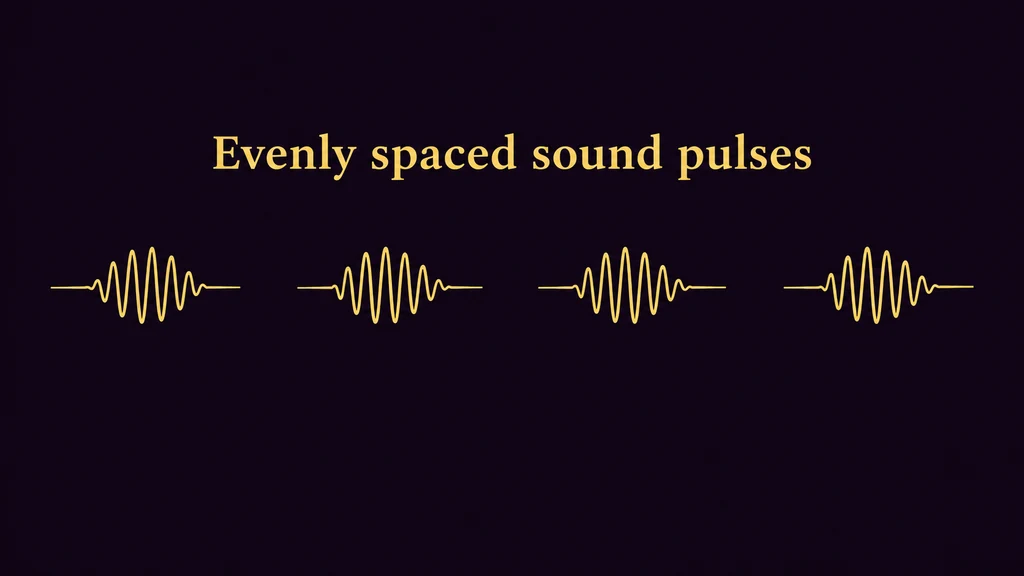
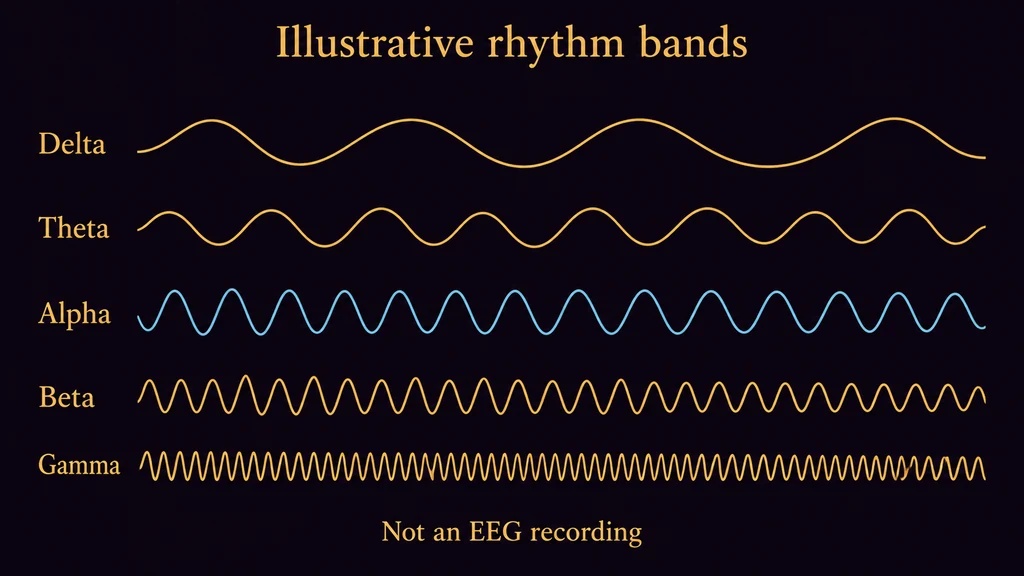
Beyond those everyday observations, acoustics also describes effects like beating, where two close frequencies create a slow pulse when played together. This is the basis of so-called binaural beats: a slightly different tone in each ear that creates the sensation of a third, slower beat in the brain. Brainwave entrainment, the idea that the brain falls into step with an external rhythm, is sometimes discussed alongside this, although the research is more cautious than the marketing tends to be. The honest summary is that sound clearly shapes how a space feels, how settled a body is, and how easy it is to slow down. Whether any specific frequency produces a specific predictable outcome is a much harder question.
What research can and cannot say
Music and sound have been studied across many disciplines, including music therapy, psychology, neuroscience, and rehabilitation research. Some general findings are reasonably well supported. Slow, predictable music tends to lower heart rate and breathing rate. Listening to chosen music can lower self-reported stress. Group singing has measurable effects on mood and a sense of connection. Music therapy, delivered by trained professionals, is a recognised supportive practice in clinical settings for things like rehabilitation and end-of-life care.
Other claims you will encounter online are much weaker than the marketing suggests. Specific frequencies in Hertz are often promoted with very confident effects attached to them, but the published research on any one pitch tends to be small, inconsistent, and easy to overstate. The narrower the claim about a single frequency, the more cautious you should be about taking it at face value. The wider truth is that research on music and sound is growing, and many findings remain preliminary. Honest listening sits comfortably with that uncertainty. You can enjoy a tone without believing the most dramatic story about it.
Common practices and instruments
The vocabulary of modern sound work covers a wide range of practices. A short tour of the most common ones:
- Sound baths: a group session, usually lying down, with a practitioner playing bowls, gongs, chimes, or other instruments around the room.
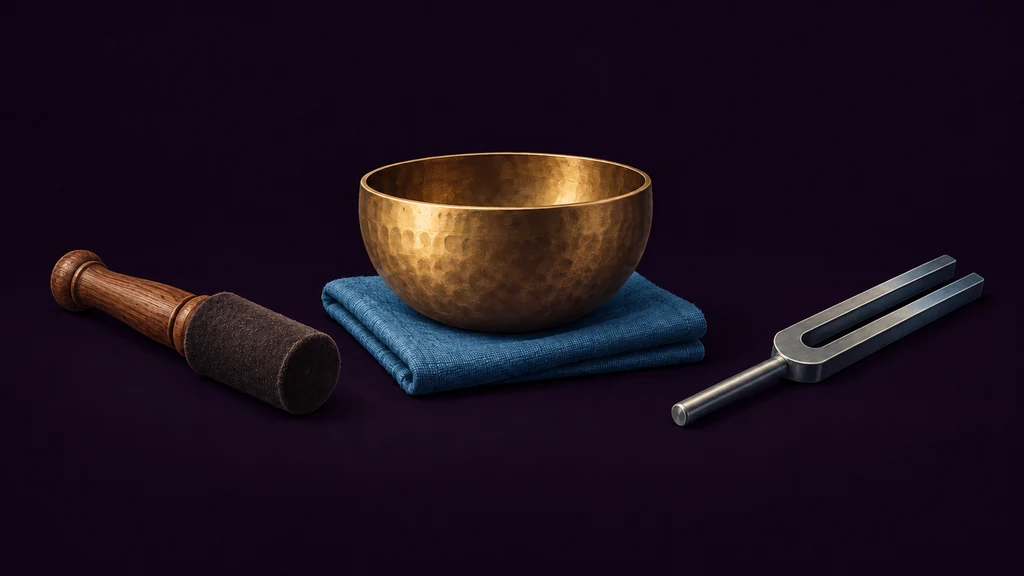
- Singing bowls: metal or crystal bowls played with a mallet or struck gently, used both in older Himalayan traditions and modern wellness sessions.
- Tuning forks: small metal forks tuned to specific pitches, used by some practitioners as a single-tone reference.
- Drone or single-tone listening: a continuous pitch played quietly in the background, often through headphones or a speaker.
- Voice work: humming, toning, chanting, or simple vocal exercises that use the listener's own body as the instrument.
- Curated soundscapes: longer recorded pieces designed for sleep, focus, or quiet reflection.
There is no single right way into the practice. Some prefer a live group session; others find recordings on a phone or laptop more comfortable. Some prefer headphones; others prefer a speaker. What suits one person on a busy weekday is often different from what suits them on a slow weekend evening.
Honest limits
It is worth saying clearly what sound work is not. It is not medical advice. It is not a stand-in for qualified professional support. It is not a promised outcome, and a practitioner who insists on one is overselling. Even the older traditions did not see sound as a stand-alone fix for the harder things in life. They placed it inside community, ritual, and a shared sense of meaning.
That said, none of this is a reason to dismiss the practice. It simply asks for the same steady reading you would bring to any other part of a thoughtful routine. A short, quiet session with a tone you like, in a room you like, with no one asking anything of you, is a perfectly reasonable thing to enjoy. Use it alongside, not instead of, professional care if you need it, and let your own response guide the practice over time.
How to begin a listening practice
If you are new to sound work, a small starting kit looks like this:
- Pick a single tone or short piece you would like to try, rather than building a long playlist at first.
- Choose a quiet ten to twenty minutes; a familiar time of day helps the practice settle into a habit.
- Sit or lie down somewhere comfortable, ideally with the lights low and the phone face down.
- Start with the volume low; you can always turn it up a touch, but ear fatigue is harder to undo.
- Try the same tone several times across a week before moving on; first impressions are not always representative.
- Keep a short note of how each session felt, especially what you noticed in your breathing and mood afterward.
A reflective practice tends to build slowly. The point is not to feel something dramatic; it is to give yourself a small, repeatable ritual that helps the rest of the day land more gently. Listeners often report that the value of a session shows up afterward, in how steady the next hour feels.
Sound work is one quiet ingredient in a wider, ordinary life. Held lightly, with curiosity rather than expectation, it can be a friendly companion to slower mornings and the kind of pauses we tend to forget to take. The Harmonance library is built in that spirit: a thoughtful collection of tones, paired with grounded notes, for listeners who like to know what they are listening to and why.
For related reading, see the science of sound healing and our guide to sound baths.
Listen with this
If this piece speaks to you, you might explore these tones gently as part of a wind-down or focus routine: 432 Hz 174 Hz 7.83 Hz Schumann binaural.
Sources
NCCIH’s overview concerns music-based interventions. Our inference is that this evidence does not establish a clinical benefit from one isolated listening tone. Personal enjoyment is a listening response, not a clinical measurement. Read the music research and its limits.
- NCCIH: Music and Health, What You Need To Know
- Music intervention reviews (PubMed)
- Music for relaxation and wellbeing (Cochrane Library)
Listen without turning context into a promise
The related tone buttons below are audible listening examples. Press Play deliberately, begin quietly and pause when you want. A traditional name, simulation or whole-music study is not proof of a clinical effect from the displayed pitch.