
Understanding vibrational frequencies
Different materials and instruments resonate in different ways. For listeners, the useful question is practical: what tone feels steady, comfortable, and supportive for meditation, rest, or reflection.
Open guide
Explore the cultural context of sound healing at Harmonance. Learn how tones, rhythm, and frequency listening can support relaxation, reflection, and open education.
For relaxation, reflection and educational exploration. Not medical advice or a replacement for professional care.
Ready to play Natural Harmony 432 Hz
Enjoy a few moments with the sound itself.

Foundations
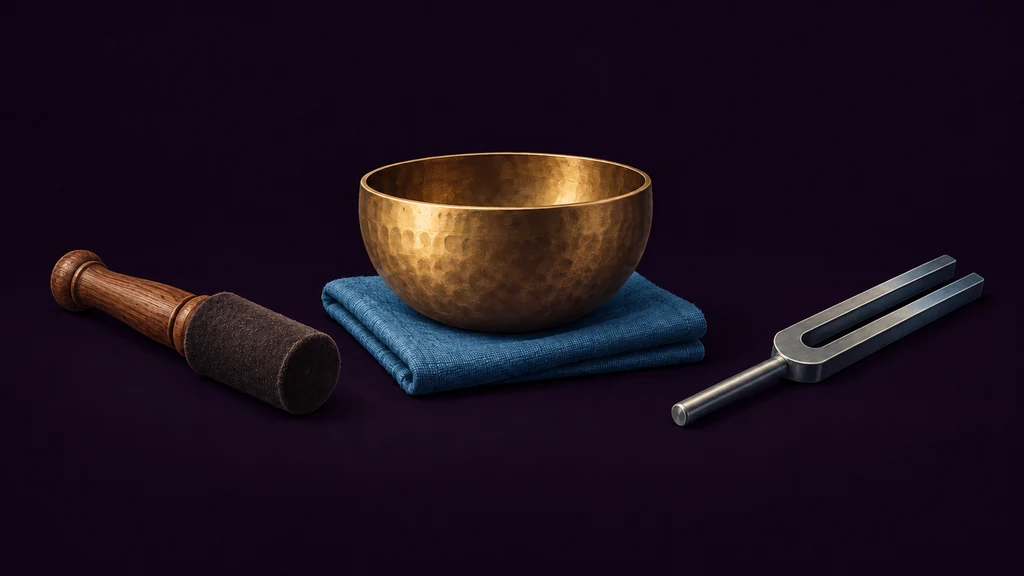
Sound-healing traditions start from the observation that sound changes space and attention. Modern research on music, meditation, and audio can be useful, but exact-frequency claims should stay modest.
Different materials and instruments resonate in different ways. For listeners, the useful question is practical: what tone feels steady, comfortable, and supportive for meditation, rest, or reflection.
Brainwave language can help describe attention and rest, but Harmonance keeps it educational. Binaural beats and steady tones are listening tools, not a reliable way to create a specific state.
Symbolic frames
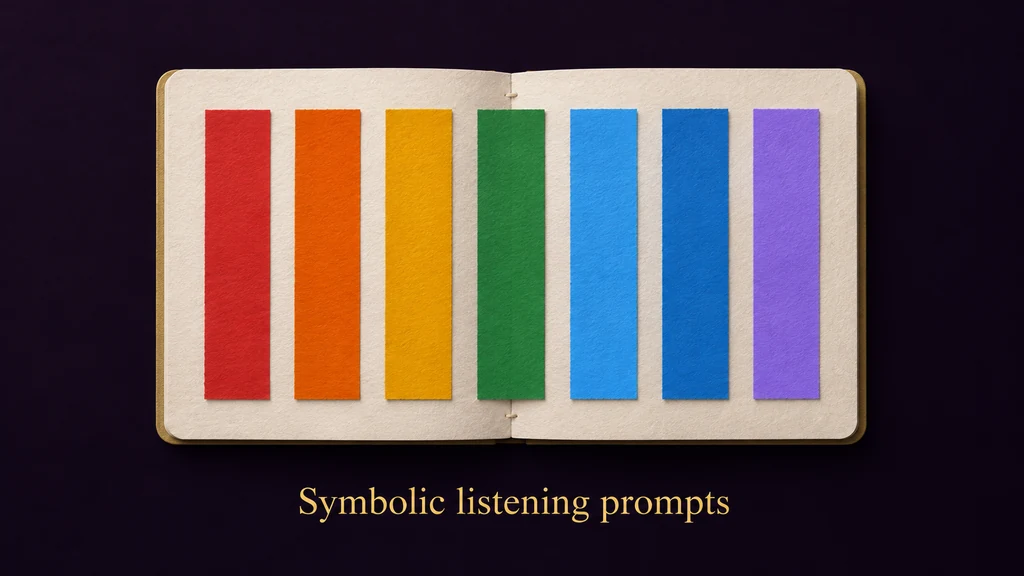
Many traditions describe subtle energy systems, such as chakras, meridians, and the biofield. Harmonance presents these as cultural and symbolic frameworks that can guide intention, not as measurable anatomy.
In practice
People use sound-healing practices in many gentle, personal ways, including:

Slow, steady listening can be a simple ritual for downshifting, breathing, and taking a pause.
Soft tones can support a low-stimulation routine before rest without promising a specific result.
Listeners may use a tone as a steady companion for journaling, meditation, or naming how they feel.
Regular listening can become a personal cue for slowing down, noticing, and returning to a chosen intention.
Evidence and limits
Research around music, attention, and relaxation is useful context, but it should not be stretched into exact-frequency promises.
A small double-blind cross-over pilot study compared listener responses to music tuned to 432 Hz and 440 Hz. Harmonance presents these as early context for exploration, not proof that one isolated pitch creates the same result for everyone. The experiment used music, not the library’s isolated tone.
528 Hz is often discussed as a symbolic listening frequency. One small open-access study examined salivary stress markers around 528 Hz music in nine participants. Harmonance presents that cultural meaning alongside research limits so listeners can explore it without expecting a fixed outcome. Its music intervention does not establish a result from an isolated528Hz library tone.
Akimoto K, Hu AL, Yamaguchi T, Kobayashi H. Health, 2018;10:1159-1170.
Binaural beats use two slightly different frequencies presented to each ear, creating a perceived fluctuation rather than a literal third tone. A meta-analysis of the research finds effects are small and mixed, so Harmonance frames these sounds as optional listening tools.
Garcia-Argibay M, Santed MA, Reales JM. Psychol Res, 2019;83(2):357-372.
Boundaries
Use Harmonance as education, relaxation, and reflective listening. It is not a care plan or a substitute for qualified support.
Keep volume comfortable, start with short sessions, and stop listening if a sound feels unpleasant or overwhelming.
Traditional names and research references can be interesting, but they do not mean a frequency will create a specific outcome.
For health questions, personal safety concerns, or ongoing distress, speak with a qualified professional instead of relying on audio.
What comes next
The best future for sound-healing education is honest and open: respect the traditions, explain the research limits, and make listening tools easy to reach for everyone.