285 Hz benefits: restoration claims, checked
285 Hz is the second lowest of the nine Solfeggio frequencies, linked online with restoration, rest and renewal, and in fuller descriptions with claims about the body that no study has tested. The number joined the set after 1999. When 37 adults rated how twelve pure tones sounded, 285 Hz came out calm and happy more than sad or angry, the second calmest of the nine.
Ready to play Restoration Theme 285 Hz
Take a little time to begin again.
What are the claimed benefits of 285 Hz?
The benefits claimed for 285 Hz are about restoration. Online it is called a tone of renewal and rest, a sound for feeling put back together after a long stretch. Fuller descriptions go further, with claims about the body that no study has tested.
Harmonance's own page names it the restoration theme: a steady, even tone for a slow, settled part of the day, offered as an intention to listen with, not an effect. None of the descriptions comes from a measurement. The number is modern, the claims about the body have no test behind them, and the one study that asked people how 285 Hz sounded put it just before a sharp fall in how calm the tones sounded.
Where does the restoration claim come from?
The oldest dated copy of the fuller description we could find is in a US patent application filed in 2016 for a way of processing recorded sound. It gives each of the nine Solfeggio tones a few lines, and its lines for 285 Hz speak of the body and say that the tone:
influences energy fields
The patent cites no test of that description, and the patent itself is about processing audio, not about what listeners feel. A wider search found no older dated source for the wording, and nothing that traces it to the people who first published the Solfeggio numbers. We do not repeat the claims as promises. On Harmonance, 285 Hz is a steady tone to rest with.
Where does 285 Hz come from?
285 Hz comes from the modern Solfeggio set, and it joined the set after the first six numbers had been published. The set began with a 1999 book, Healing Codes for the Biological Apocalypse, which drew six numbers from verse numbers in the Bible's Book of Numbers. Its publisher's press release announced them:
the codes revealed a series of six electromagnetic sound frequencies that correspond to the six missing tones of the ancient Solfeggio scale
The six run from 396 to 852 Hz, and 285 is not among them. Within two years, sets of nine were in use: a tuning fork maker's page, as the Internet Archive saved it in 2012, asks "Why 6 forks when others have gone to 9?" and dates its own debate about going to nine to November 2000. Who first added the three new numbers, 174, 285 and 963, is not recorded.
All nine appear together, with a date, in a US trademark application filed by Leonard Horowitz, one of the book's two authors, in February 2007. It lists them as "396, 417, 528, 639, 741, 852, 963, 174, and 285". 285 comes last of all.
The number is a count. Write the nine from lowest to highest and each adds 1 to every digit of the one before, with 9 wrapping round to 1: 174, then 285, then 396, the first of the book's six. So 285 is 174 plus 111, and 396 is 285 plus 111. The 2016 patent runs the same count downwards and finds "three frequencies which can be calculated below the 396 before breaking the pattern", 285, 174 and 63. The 963 Hz guide draws the whole count, and the 174 Hz guide follows the number just below this one.
What happened when researchers played 285 Hz?
No study has tested what 285 Hz does for the people who hear it. PubMed, the main index of medical research, finds nine records for "285 Hz", and none of them asks that question. Two use the number only as a test tone in hearing research: a study that played tones up to 285 Hz to 126 young adults to record their hearing pathway, and one in which zebra finches and budgerigars caught a mistuned harmonic at 285 Hz more finely than people did.
The one animal study in the list makes a point worth keeping. Researchers in Minnesota played a 285 Hz tone to zebrafish while releasing a chemical alarm cue, and the fish learned to take the tone as a sign of danger: they "readily associated risk of predation with Tone 1 (285 Hz)", and ignored a second tone at 762 Hz. The tone meant what the training made it mean.
Two small studies that played Solfeggio tones to people left 285 Hz out. A skin conductance study of 18 adults used six tones from 396 to 852 Hz, and a pilot in Japan gave five tones, 174, 396, 528, 639 and 963 Hz, to two adults each.
37 adults rating twelve pure tones, Canberra
One study did play 285 Hz to people, and asked them how it sounded. Researchers at the Australian National University ran an online test in which 37 adults heard twelve pure tones for 20 seconds each: the nine Solfeggio tones plus 110, 220 and 440 Hz (Kumar, Abhayapala and Samarasinghe, 2022). For each tone they rated, on a scale of 1 to 10, how happy, sad, calm and angry it sounded, comparing it with the tone before and the tone after.

| Sounded | 285 Hz | All twelve tones |
|---|---|---|
| Calm | 6.7 | 1.9 to 8.3 |
| Happy | 5.5 | 2.6 to 5.5 |
| Sad | 5.0 | 3.2 to 6.1 |
| Angry | 3.1 | 2.6 to 9.1 |
285 Hz sits where the ratings turn. The three tones below it sounded calmer still, from 7.6 to 8.3 out of 10. Above it, the paper says, the calm rating "dips sharply": 396 Hz was rated 5.0 and 528 Hz 3.3, and by 963 Hz anger had climbed to 9.1. 285 Hz is the last tone before that fall.
The test asked how each tone sounded, not how the listeners felt. The tones always came in rising order and were judged against their neighbours, so the ratings may follow the order as much as the sound. The volunteers used their own headphones at home, the sample was young, with an average age of 27, and the paper gives averages with no test of whether neighbouring tones really differ. The ratings here were read from the paper's graph, so each is good to about a tenth.
The wider field is not much further along. The US National Center for Complementary and Integrative Health sums up music research in general:
However, because much of the research on music-based interventions is preliminary, few definite conclusions about their effects have been reached.
For listening, the useful part is simple. If you want a tone that most people hear as calm without sounding heavy, a low one is the likelier choice, and 285 Hz is the higher of the two Solfeggio tones that sounded clearly calm. Whether it does anything more than sound calm, nobody has shown.
Why does 285 Hz fall between two piano keys?
285 Hz is not a note on a piano. With the A above middle C tuned to 440 Hz, the concert pitch almost all music uses, the nearest keys are C sharp 4, at 277.18 Hz, and D4, at 293.66 Hz. Measured in cents, where a cent is a hundredth of a semitone, 285 Hz sits 48.2 cents above C sharp and 51.8 cents below D: almost exactly a quarter tone, nearly as far from both keys as a pitch can be.
Of the nine Solfeggio tones, 285 Hz lands furthest from any key. 174 Hz is 6 cents under F3, and 741 Hz 2 cents over F sharp 5. The patent quoted above makes the same calculation in its own table, "285 Hz = C# 4 452.37 Hz +48 cents": to make 285 Hz a real C sharp, the whole piano would have to be retuned with A at about 452.4 Hz.
The 285 Hz page carries the quarter tone into its music. With Strings on, it plays one Harmonance score that every tone page shares, pitched so that its home note falls on an octave of the page's tone. On this page the whole score moves with it, so the strings play between the keys too. We measured the page's Strings loop from its own audio file.

| Line | Nearest key | Cents off |
|---|---|---|
| 95.2 Hz | G2 | 49.8 below |
| 107 Hz | A2 | 47.2 below |
| 119.6 Hz | B flat 2 | 44.2 above |
| 142.6 Hz | C sharp 3 | 49.1 above |
| 159.9 Hz | E flat 3 | 47.8 above |
| 190.5 Hz | G3 | 49.1 below |
| 214.5 Hz, the strongest | A3 | 43.9 below |
| 356.9 Hz | F4 | 37.5 above |
Download the strings measurements (CSV)
Taken as a whole, 95.4% of the strings' sound between 55 and 2,000 Hz lies more than 25 cents from any piano key. Nothing about that is a fault: the strings follow 285 Hz, not the piano. It means only that the 285 Hz page lives in its own tuning. Play it beside a song or an instrument at concert pitch and the two will sit about a quarter tone apart, each between the other's notes. On its own, or with other tones in Studio, it has nothing to sit against.
What does the 285 Hz page play?
With Strings off, the page plays the tone on its own from a 20 second loop. It is not a perfectly pure sine: two faint overtones sit above it, at 570 Hz, 23.1 dB quieter, and at 855 Hz, 34 dB quieter. Its octaves are 142.5 Hz below and 570 Hz above, and in air each of its waves is about 1.2 metres long.
With Strings on, slow chords carry the music, and the exact 285 Hz tone still plays underneath, 35.5 dB below them. The strongest line of the strings is 214.5 Hz, a fourth below the tone, and one of the others, at 142.6 Hz, is the tone's own lower octave.
How long should you listen to 285 Hz, and how loud?
No study sets a length for 285 Hz: the rating test played it for 20 seconds. Harmonance's page suggests fifteen to twenty-five minutes on a quiet, unhurried part of the day, at a gentle, conversational volume, and switching to another tone if the steadiness starts to feel flat rather than soothing.
Keep the volume low. Loud listening is the one risk that is well established. The US National Center for Complementary and Integrative Health notes that "listening to music at too high a volume can contribute to noise-induced hearing loss", and the World Health Organization's safe listening advice is that "you can safely listen to a sound level of 80dB for up to 40 hours a week", with your device's volume at no more than 60% of maximum.
How do you listen to 285 Hz on Harmonance?
Press play on the 285 Hz page. With Strings off it plays the tone alone; switch Strings on beside the player and the strings carry the same tuning across its octaves. Nothing plays until you press play, and no account is needed.
The need to unwind page sets 285 Hz beside 432 Hz and Neptune's tone for ten quiet minutes. In Harmonance Studio you can set 285 Hz under other tones and shape your own mix. Its neighbours in the count are the 174 Hz page, lower and heavier, and 396 Hz, which the 396 Hz guide covers, and the Solfeggio collection plays all nine.
For the wider field, what the science of sound healing shows sets out what research on sound and music has and has not found, and the guide to the Solfeggio frequencies follows the whole set, tone by tone.
Sources and limits
The history of the number rests on the 1999 press release, a tuning fork maker's page, a US trademark record and a US patent, each read in its original or archived form. The research is one online rating test of pure tones, which asked how 285 Hz sounded, not what it does; PubMed holds no study of what 285 Hz does for listeners, which does not prove that none exists elsewhere. The ratings were read from the Canberra paper's graph, so each is good to about a tenth. The measurements of the 285 Hz page are Harmonance's own, made from the page's audio files; nobody's ear was the instrument.
- Tetrahedron Publishing (1999), press release for Healing Codes for the Biological Apocalypse, Internet Archive copy: the six numbers the book announced.
- SomaEnergetics, tuning fork product page, Internet Archive copy from 2012: sets of nine by November 2000.
- US Patent and Trademark Office, application 77099679: all nine numbers, filed in February 2007, 285 last.
- US patent 9,886,965, psychoacoustic processing of audio material, Google Patents: the description of 285 Hz, the count below 396 and the retuned A, filed in 2016.
- Kumar, Abhayapala and Samarasinghe (2022), frequency cues for human emotions, in Acoustics: 37 adults rating twelve pure tones.
- Seigel and others (2021), zebrafish and a 285 Hz tone, PubMed: a tone that took the meaning training gave it.
- Prendergast and others (2017), noise exposure in young adults, PubMed: tones up to 285 Hz as test sounds.
- Lohr and Dooling (1998), timbre and harmonicity in birds and people, PubMed: 285 Hz as a test frequency.
- Presley, Stamps and Davis Alexander (2026), Solfeggio tones and skin conductivity, Journal of Scientific Exploration: six tones, 285 Hz not among them.
- Wago, Bando and others (2026), Frequency-related Exploratory Research No. 1: five tones, 285 Hz not among them.
- Wikipedia, A440 (pitch standard): concert pitch, A at 440 Hz.
- National Center for Complementary and Integrative Health, music and health: the state of music research, and loud listening.
- World Health Organization, safe listening: weekly limits and device volume.
Tones to play while you read
Related guides
111 Hz benefits and the ancient chamber story
111 Hz benefits, checked: the angel number behind the tone, the stone chambers that ring near 110 Hz, and what a pilot found when 30 adults listened.
141.27 Hz benefits: what the Mercury frequency is and is not
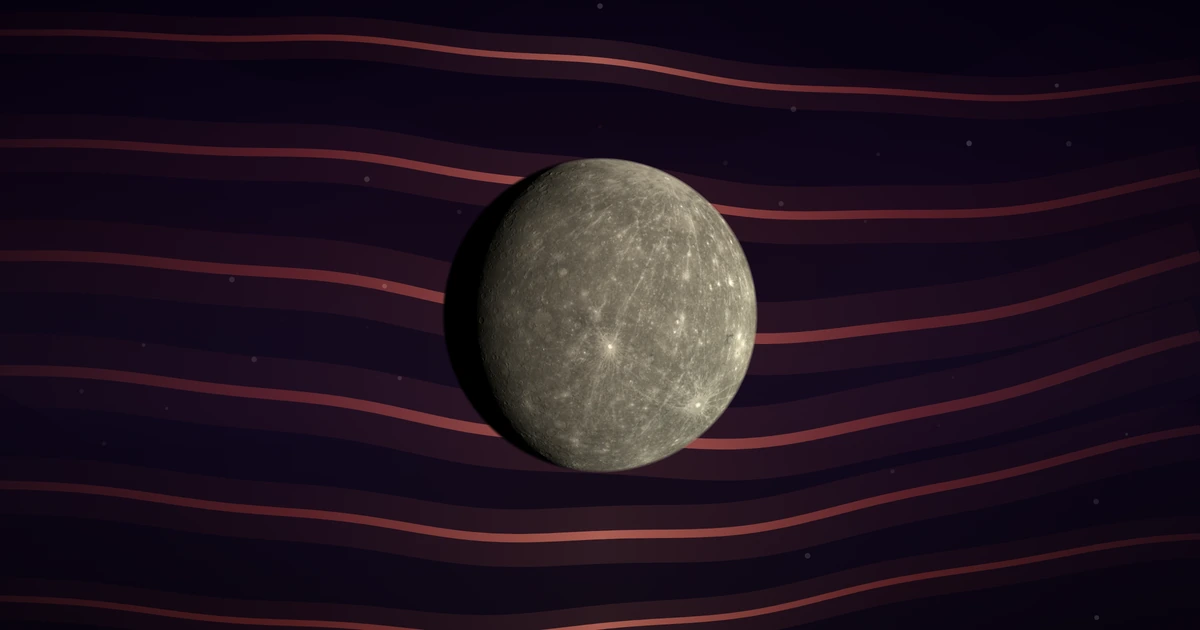
141.27 Hz benefits, checked: the Mercury tone is its 88-day orbit raised 30 octaves, its spin sounds the fifth above, and no study has tested it.
174 Hz benefits: the claims and what is known
174 Hz benefits, checked: the comfort and natural anaesthetic claims, where the number came from, and how 37 listeners rated the lowest Solfeggio tone.
Just be curious. This is not a medical device or medical advice. For any health concern, please speak to your doctor.