Frequency guide
Listening context
What you hear
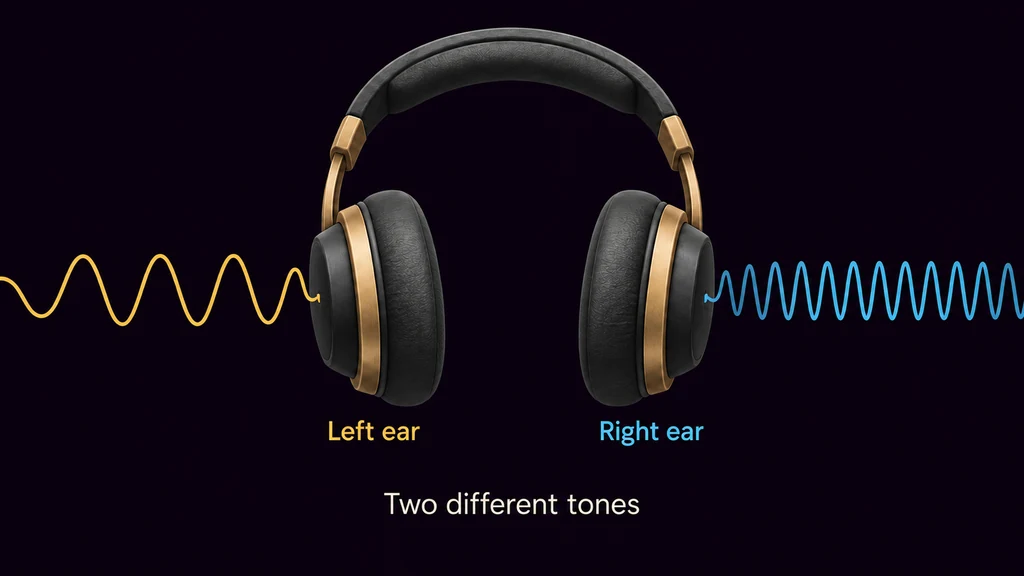
Two steady sine tones, one in each ear: 108 Hz on the left and 128 Hz on the right. Nothing else is added: no music, no noise, no pulsing and no extra layers. Your hearing compares the two and you perceive a slow beat at their difference, 20 Hz. The beat is made inside your own hearing, so it only appears with headphones: through speakers the two tones mix in the room and the beat is lost.
The beat stays at exactly 20 Hz for the whole nine hours. Nothing about the sound changes except the gentle fade out at the end.
Where the number comes from
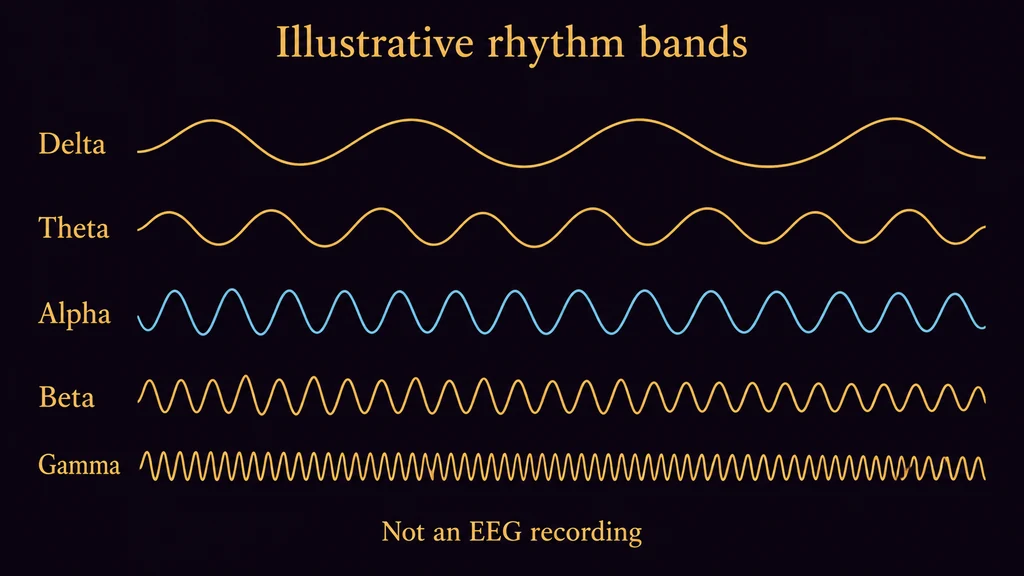
20 Hz sits in the middle of the beta band, the faster range researchers associate with alert, engaged thinking. Beta covers roughly 14 to 30 Hz, the faster activity researchers associate with alert, engaged thinking. A binaural beat at a beta rate is a listening choice inspired by that band, not a way to produce it.
A way to try it
Try it quietly in the background of a working session and notice whether you like it there. Just be curious.
Nine hours, start to finish
Press Play and the sound starts straight away, from the piece's first second. Pause keeps your place: press Play again and it carries on from the same moment with the same beat. After nine hours it fades out and stops by itself. It never loops and never starts again on its own.
How to listen
- Use stereo headphones, with left and right the right way round, and turn off spatial audio or head tracking so each ear gets its own tone.
- Start quietly. Raise the volume only until the low hum is comfortable; there is nothing to gain from playing it loudly.
- Settle somewhere you will not be interrupted. The beat can feel faint, so there is no need to strain to hear it.
- Do not listen while driving or doing anything that needs your full attention.
- If anything feels uncomfortable, such as dizziness, ear discomfort or unease, stop and take the headphones off. If you live with a seizure disorder or any condition affected by rhythmic sound, speak to your doctor before trying it.
What the evidence says
Binaural beats are a real effect of hearing. Whether they change brain activity, or how people feel, is far less settled. A 2019 meta-analysis pooled earlier studies and reported small to moderate average effects on some measures of attention and memory, with large differences between studies. A 2023 systematic review of studies that recorded brain activity found the results inconsistent: some reported activity that followed the beat and others did not. No study has shown that one beat rate works better than another for everyone. Think of it as a listening experiment: notice what you notice, and let your own experience guide you.
Part of the Binaural Beats collection
This is one of 13 pieces in the Binaural Beats collection: eight fixed beats and five slow brainwave sessions, all made the same way. A nine-hour video made from this same recipe is coming to the Harmonance YouTube channel and will be linked here once it is public.