Frequency guide
Listening context
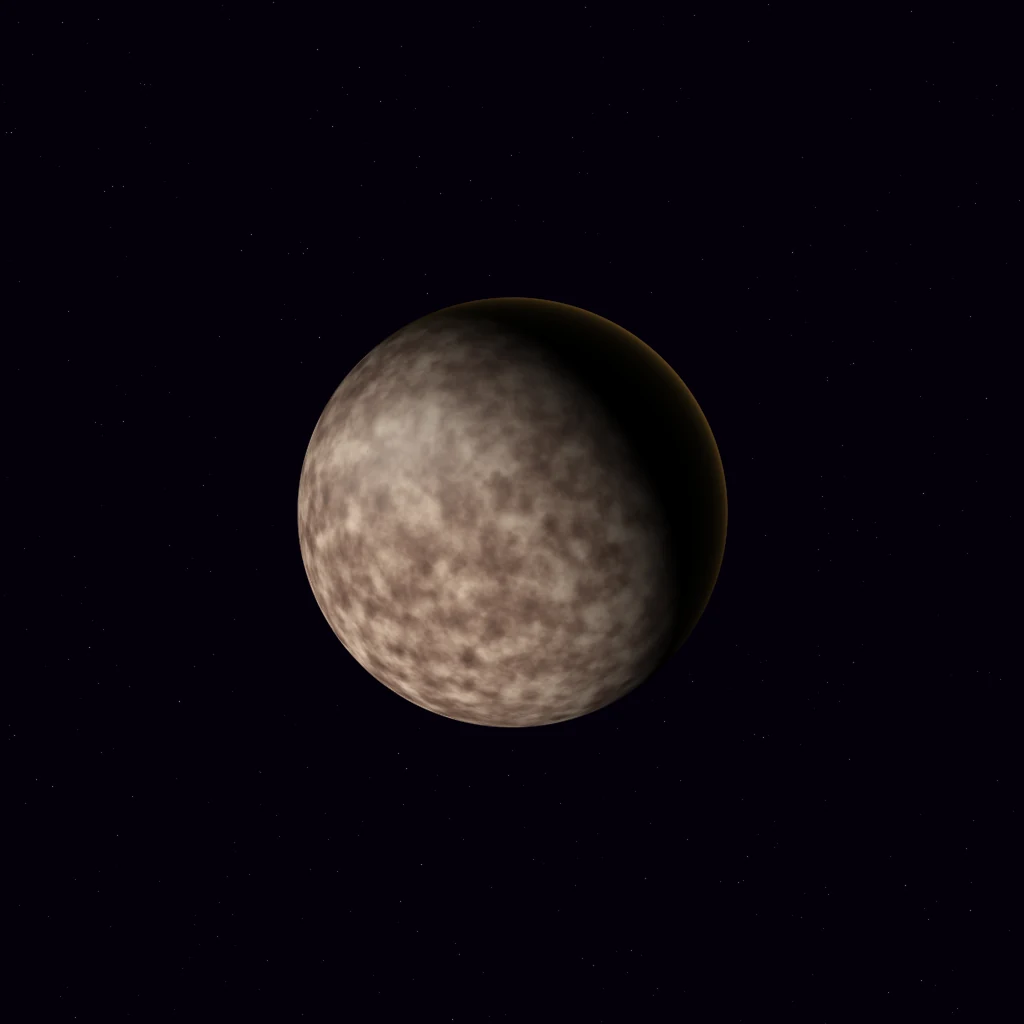
140.25 Hz is the tone that Hans Cousto's cosmic-octave system assigns to Pluto, the small, distant world at the far edge of the Sun's family. The pitch sits close to a C-sharp in standard tuning and carries a darker, slower character than the brighter Mars or sunnier Jupiter references.
Origin: the astronomy and the octave maths
Cousto's method converts a real orbital period into an audible pitch by doubling its frequency through octaves. Each doubling is one octave; enough of them lift even a centuries-long orbit into the hearing range while keeping its proportions intact.
Pluto takes about 248 Earth years to circle the Sun, on a long, tilted, oval path that sometimes brings it closer to the Sun than Neptune. It is the slowest journey in Cousto's planetary family, and the maths needs many doublings, forty octaves using the 90,737.2-day period in Cousto’s 1984 book, to bring that orbit up to about 140.25 Hz. The result is a heavy, low-set tone. Pluto was reclassified as a dwarf planet in 2006 once astronomers found many similar bodies in the outer solar system, but the older astrological tradition that places it among the planets is the symbolic ground this tone rests on. As always, the figure is a translation of orbital motion, not a sound from a world far beyond the reach of any sound wave.
Tradition and mythology
Pluto is named for the Roman god of the underworld, the Greek Hades, ruler of the hidden realm of the dead and of buried riches. The name, suggested by an eleven-year-old schoolgirl, Venetia Burney, in 1930, suited a dark world at the system's edge. Because Pluto was discovered only in the modern era, modern astrologers gave it themes drawn from its namesake: deep, structural change, shedding old skins, and looking honestly at what has been put off. Cousto's tone carries that weight, and many listeners find it works best in modest doses rather than continuous play.
Pluto's story is a useful lesson in how science revises itself. When Clyde Tombaugh found it in 1930, it was hailed as the ninth planet. Over the following decades it proved far smaller than first thought, smaller even than our Moon, and in the 1990s and 2000s astronomers began finding many similar icy bodies in the same distant region, the Kuiper Belt. Once it was clear Pluto was one of a crowd rather than a lone planet, the International Astronomical Union introduced the term dwarf planet in 2006. None of this diminishes the world itself: NASA's New Horizons spacecraft flew past in 2015 and revealed a startling landscape of nitrogen-ice plains, water-ice mountains, and a faint blue haze, a far richer place than the distant dot anyone had imagined.
How listeners use it
- A low, heavy character that feels grounded rather than airy.
- A backdrop for journaling about life stages or long-term changes.
- A sense of slowing internal chatter rather than energising it.
- Best in shorter sittings; the weight of the tone can be a lot over longer stretches.
What the evidence says
NCCIH’s overview concerns music-based interventions. Our inference is that this evidence does not establish a clinical benefit from this isolated 140.25 Hz tone. Personal enjoyment is a listening response, not a clinical measurement. Read the music research and its limits.
How to listen
- Try a short session of around ten minutes the first time you sit with it.
- Keep the volume low so the tone is companionable rather than imposing.
- Pair it with reflective writing about something you have been carrying for a while.
- Hold the session for a calm, unhurried part of the day rather than a busy one.
- Step away or switch to a brighter tone if the mood starts to feel heavier than helpful.
The 140.64 Hz alternative: a different orbital input
For direct playback, use the related frequency page: 140.25 Hz: Pluto.
Comparing Pluto’s two orbital-period inputs
The Pluto tone belongs to the cosmic-octave family devised by Hans Cousto, in which the reciprocal of a real orbital period is doubled through octaves until it climbs into the range a human ear can hear. Pluto's long, distant orbit gives a low, heavy, slow-moving reference that listeners tend to reach for in modest doses rather than continuous play. Planetware’s later table lists 140.64 Hz from a 90487.277-day orbital input. Cousto’s 1984 book used 90737.2 days, producing 140.25 Hz at octave 40. The canonical player here remains 140.25 Hz; the alternate is a different orbital-period calculation. Read the source table and its historical note.
Where the symbolism comes from
In astrology Pluto is tied to deep change, shedding old patterns, and looking honestly at what has been put off. The world is named for the Roman ruler of the underworld, and modern astrologers gave it those themes because it was discovered only in 1930. None of this is a literal property of the sound; it is a story that some listeners find a useful frame while they sit quietly with a low drone.
It is worth being plain about the mechanism. Space is very nearly empty, so nothing travels to us from Pluto as sound. The tone is arithmetic applied to a real motion, not a transmission. Hold the underworld symbolism lightly: it is colour for the imagination, not a claim about what the tone does to you.
How listeners use it
Reports are personal and vary widely. Common notes include:
- A low, grounded character that suits reflective writing about long-term changes or life stages.
- A sense of internal chatter slowing rather than lifting.
- Best in shorter sittings; the weight of the tone can be a lot over longer stretches.
Many people fold it into a quiet, unhurried part of the day. If a session brings up more than feels manageable, please lean on qualified human support alongside the practice. Our guide to sound baths and how to listen safely covers gentle ways to begin.
How to listen
- Try a first session of around ten minutes and notice how it lands.
- Keep the volume low and conversational so the tone is companionable rather than imposing.
- Pair it with reflective journaling rather than a busy task.
- Step away or switch to a brighter reference if the mood starts to feel heavier than helpful.
Listen with this
If this tone suits you, these neighbouring references give you something to compare it with.
Sources
NCCIH’s overview concerns music-based interventions. Our inference is that this evidence does not establish a clinical benefit from one isolated listening tone. Personal enjoyment is a listening response, not a clinical measurement. Read the music research and its limits.
Harmonance is for relaxation, reflection, and educational exploration. It is not medical advice and should not replace professional care.
What benefits are claimed for 140.25 Hz?
The traditional associations described above are listening themes, not measured outcomes. NCCIH’s overview concerns music-based interventions. Our inference is that this evidence does not establish a clinical benefit from this isolated 140.25 Hz tone. Personal enjoyment is a listening response, not a clinical measurement. Read the music research and its limits.
What is 140.25 Hz?
140.25 Hz means 140.25 cycles per second. Cousto doubles Pluto's roughly 248-year orbit through octaves into this tone; named in 1930 for Hades or Pluto, god of the underworld, the distant world carries modern themes of depth and structural change.
Try the pitch, then notice
Press Play above when you are ready. Start quietly, listen briefly, and use the player’s volume control. Compare the neighbouring tones without judging one as medically superior. Stop if the sound is uncomfortable. Signed-in Studio lets you choose layers and timers; public listening needs no account.